

By Hayden Spiess
Charter Senior Living’s emblem features the helm of a ship. Keven J. Bennema, co-founder and CEO of the seniors housing owner and operator, is more accustomed to the steering wheel of an RV.
Since 2021, Bennema and his wife and co-founder Kim Bennema have embarked on an annual RV tour of Charter’s portfolio of communities located throughout the eastern United States, with a large concentration of properties in the Midwest, Kentucky and Tennessee. This year marked the fourth iteration of this voyage for the Naperville, Illinois-based company.
Kim Bennema currently serves in the role of Spirit Captain, according to Charter’s website. She was also the inspiration for the tour.
“As we were coming out of COVID, Kim suggested that we should buy an RV. And then we wound up going out and purchasing an RV and starting the tour in 2021,” recalls Bennema. “Back then, we had about 20-something communities. For this latest RV journey, we visited 70 communities in about three-and-a-half months.”
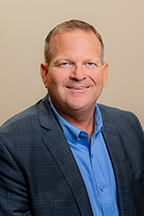
With an operating portfolio comprising 5,545 units across 68 communities, Charter Senior Living ranked as the 39th largest U.S. operator in the 2025 edition of the ASHA 50, which was published by the American Seniors Housing Association (ASHA) and based on figures as of June 1.
Bennema describes the tour as an opportunity to interact with employees that might “otherwise be parked in a corporate office” and to be present with community-level associates.
“Our associates love when we pull up in our RV,” says Bennema. “We’re there as big cheerleaders. We’re there as big supporters. Myself, my wife and all of our senior team members — we are all very visible in our communities all the time, and this is kind of like the crescendo.”
From Caregiver to CEO
Bennema has no trouble relating to the associates that staff his organization’s communities. After all, he’s been immersed in the sector since 1993 when he entered the profession as a caregiver immediately after graduating from Aurora University in Illinois. Bennema and his wife, who also previously worked as a caregiver, founded Charter in 2016.
Bennema says that many aspects of seniors housing haven’t changed during his 30-plus years in the industry. “Being a caregiver today is a very difficult job, and there are a lot of similarities to when I was working as a caregiver,” attests Bennema.
“Residents need assistance, they need a human being showing up to acknowledge what their needs are. That’s kind of been the business model of seniors housing for 40 years now.”
In other ways, however, the industry has evolved greatly. For example, Bennema has observed firsthand the influx of new investors entering the senior living sector.
“There are so many new private equity groups, family offices — groups that have traditionally been focusing their attention on the multifamily space — that want to get into senior living because they see tremendous opportunity,” explains Bennema.
Panelists at the 2025 InterFace Seniors Housing Southeast conference in Atlanta echoed Bennema’s observation. “Relative to other asset classes, you’re seeing a lot more capital inflows for people wanting exposure to the space,” said Matt Pyzyk, managing director of Green Courte Partners.
There is, however, a learning curve for investors entering seniors housing, making partnering with a strong operator paramount. “They know that the only way that they’re going to be able to seize that opportunity is if they find the right operator,” explains Bennema.
Enter Charter, which has established an impressive reputation and presence as an operator and has continued to expand. This growth is reflected in the 2025 ASHA 50 rankings. Charter’s position at No. 39 is up two notches from No. 41 (5,187 units and 64 communities) in 2024.
Charter’s portfolio is primarily comprised of communities that it manages on a third-party basis. This constitutes roughly 68 percent of the total number of properties operated by Charter. Of the remaining communities, Charter either has full ownership or partial ownership through a joint-venture structure.
Prolific Portfolio Growth
The community count for Charter has already grown beyond the figures reported in the 2025 ASHA 50 rankings. According to Bennema, the company has sold one community but added three additional properties, with imminent plans for further growth.
The company is targeting growth in the independent living segment. Currently, roughly 45 percent of Charter’s footprint consists of memory care units, with another 45 percent comprising assisted living units, according to Bennema. The remainder of the portfolio is made up of independent living residences.
In addition to expanding via acquisitions, Charter is also growing through development despite the many challenges that have plagued most new senior living projects.
According to the National Investment Center for Seniors Housing & Care (NIC), fewer than 1,400 new senior living units opened in the third quarter of 2025, with inventory growth remaining below 1 percent for the second consecutive quarter. NIC attributes the extremely limited new supply to the high cost of capital, materials and labor.
Bennema acknowledges the headwinds and notes that Charter has not been immune to their effects. “The economic factors are very real, and we’re well aware of that,” he shares. “We are always looking for ways to keep our costs down. We are one of the very few operators that is actually currently developing seniors housing.”
One helpful strategy, says Bennema, is to focus more on secondary markets. Charter’s current projects include communities in Sheboygan, Wisconsin, and Winder, Georgia. Totaling 116 units and featuring independent living, assisted living and memory care residences, the Winder development is scheduled to open in late summer 2026. Charter’s Sheboygan project will total 183 independent living, assisted living and memory care units and will likely open in 2027.
Elder Care Evolves
Bennema also cites technological advancements as one of the biggest hallmarks of contemporary senior living. Charter leverages technologies such as those for fall detection and prevention to help mitigate the challenges of staffing issues and labor shortages.
“There are some really interesting technologies out there that can help us predict potential incidents,” declares Bennema, who points out that it is logistically impossible to provide a one-to-one ratio of caregivers to residents.
Amenity offerings have also changed since Bennema started in the business. There is a technological component to the evolution of amenities as well.
“Independent living developments have to have more tech amenities so people can continually utilize their devices the same way that you and I do,” notes Bennema.
“The dining experience is also an amenity,” he adds. “A robust dining experience can be a differentiator for why people stay in your community. Food is the most important amenity.”
Another experience that shaped Bennema’s approach to operating senior living facilities was having his own father cared for at a Charter community.
“It really gave me more perspective on what our customers experience. It helped me better understand the perspective of families when it comes to how their loved ones are being cared for. It was a wonderful experience, and the fact that he was able to pass away in one of our communities was that much more special for us as a family.”
Bennema’s history has not only informed his approach to the resident experience, but also the leader’s treatment of employees.
“We really focus on doing right by our associates — paying them fairly, treating them well and offering them opportunities for advancement,” he emphasizes. “By really focusing our attention on how we treat our associates and doing that well, we believe that our residents will be that much better cared for.”
Out of Office
One distinct characteristic of Charter as an organization is that it operates without a corporate headquarters. According to the CEO, this decentralized approach allows for greater flexibility as a company. “We can pivot very quickly,” he insists.
Without being tied to a specific headquarters location, Charter’s employees are able to travel more and interact with colleagues across the portfolio.
“Our senior team truly is supporting our communities,” emphasizes Bennema. “The visibility also allows for more relatability. We really believe in getting to know our employees, and you can only do that by being visible.”
Bennema says that Jayne Sallerson, president, COO and partner, is an integral part of leading these efforts and the company’s day-to-day operations.
Fostering a culture of professional growth and self-development is a hallmark of Charter. At the end of this September, the company marked more than 300 internal promotions since its inception nearly a decade ago.
“Internal promotions are a huge sign of the health of the culture,” he says proudly. “That’s another indicator of what makes us different — we always try to promote from within because it shows the strength of a company’s culture and commitment to associates.”
With multiple new openings on the horizon and strong occupancy across Charter’s existing portfolio, Bennema has every reason to be bullish on the company’s future.
“We understand what it takes to manage communities to reach their full potential and to manage people to help them reach their full potential.”
— This article originally appeared in the October-November issue of Seniors Housing Business magazine.