By Roger Mali According to a recent report by Lument, 45 percent of qualified respondents to a survey conducted by the company plan to acquire seniors housing assets this year. Meanwhile, only 14 percent plan to sell. That imbalance tells you exactly where pricing power sits. There is a particular kind of confidence that settles over a seller’s market though, and it tends to make people sloppy. When every headline confirms that buyers are circling, when capital is abundant and occupancy is climbing, there is an assumption that you need only …
From The Magazine
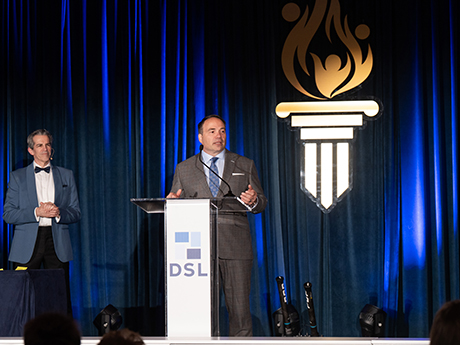
By Matt Valley The past year has been a momentous one for Richard Hutchinson and Discovery Senior Living, the largest privately held seniors housing operator in the United States. In February, Hutchinson was elected chair of the American Seniors Housing Association (ASHA) for the 2026-2027 term. Meanwhile, the Bonita Springs, Florida-based company that he co-founded more than 30 years ago — and currently leads as CEO — has experienced rapid growth by shifting its strategy toward a highly scalable regional management model. Discovery has expanded its operations through major management …
By Beth Mattson-Teig Marketing 101 is to know your target customer. And for many senior living communities, that customer focus is shifting to baby boomers and their Gen X children. Boomers are taking a bigger step into senior living across all segments — from active adult and independent living (IL) to more needs-based assisted living (AL) and memory care. Baby boomers are generally considered to be more tech savvy, active and independent than their parents — and they’re proving to be very discerning customers. “As the next generation of older …
By Hayden Spiess Professionals active in the seniors housing lending space say that the sector is somewhat insulated from cyclical economic headwinds relative to other types of commercial real estate. Even so, lenders and borrowers have not been exempt from contending with factors such as elevated interest rates. Though the secured overnight financing rate (SOFR) has declined meaningfully year over year, the U.S. 10-year Treasury yield has remained largely unchanged. Widespread geopolitical turmoil is also creating uncertainty around not only interest rates, but also the outlook for inflation and other …
By Jane Adler Private equity firms are snapping up a bigger slice of the seniors housing market as investors seek healthy returns. The rationale for investing is increasingly clear: The long-anticipated baby boomer wave is arriving, bringing a growing need among these older adults for more appropriate housing and expanded care options. Seniors housing occupancies and rental rates are rising. New development is still constrained. And other commercial real estate asset classes are not performing as well as seniors housing, which is generating decent returns. Given these dynamics, it’s not …
By Hayden Spiess Christopher Metternich believes that senior living residents know more than the industry gives them credit for. “Sometimes we think that we’re a little bit smarter than a resident,” muses Metternich. “Instead of thinking that way, we should be looking at the residents to tell us how we should do our business. They’re paying us money, and they are asking for services in a certain way.” Metternich is founder and part owner of Viva Senior Living, a third-party seniors housing management company that incorporates a resident-centric attitude throughout …
By Beth Mattson-Teig Fueled by booming demand and sharper market insights, the active adult sector is hitting its stride and redefining what senior living can be for a new generation of residents. Active adult is still in the early innings with plenty of runway for growth as the sector continues to mature and evolve. A big part of that evolution relies on continuing to collect data and using lessons learned to adjust development strategies and operating models. “We don’t have one-size-fits-all for every market. One thing we’ve learned over time …
By Matt Valley Rising demand for home care and home healthcare in seniors housing is primarily driven by a rapidly aging population, with over 10,000 baby boomers turning 65 daily. According to the U.S. Census Bureau, the share of the population age 65 and older steadily increased from 12.4 percent in 2004 to 18 percent in 2024. Moving up the age chart, the 80-plus population nationally is expected to climb from 14.7 million people in 2025 to 18.8 million in 2030 and 22.9 million in 2035, according to NIC MAP. …
By Hayden Spiess Baby boomers, who form the incoming wave of seniors housing residents, have witnessed remarkable — some might say dizzying — technological leaps in their lifetimes. Born between 1946 and 1964, baby boomers have begun to turn 80 this year. The oldest among the generation were born even before the microwave had been brought into existence (in 1947). Now, fewer than 100 years later, innovations have enabled everything from artificial intelligence (AI) capable of carrying on conversations to self-driving cars. Senior living specifically has seen its own surge …
By Jane Adler Major urban areas tend to get most of the attention in the senior living industry. After all, these locations have large populations and submarkets with a sizable pipeline of income- and age-qualified older adults who potentially want or need independent living, assisted living or memory care. But secondary and tertiary markets, occasionally overlooked, are generating solid investment returns and even outperforming big-city properties in many cases. Smaller cities have less competition, say owners and operators. Existing senior living properties in secondary and tertiary markets refilled faster after …