
Paul Gordon, a partner at HansonBridgett, a full-service law firm headquartered in San Francisco, has counseled clients in the seniors housing and care space since 1975. He is such a longstanding expert in the business that the Chambers USA legal directory refers to him as the “godfather of seniors housing.”
Gordon’s entire practice is devoted to representation of seniors housing and long-term care providers, as well as related organizations. This work includes business transactions, regulatory compliance, risk management and dispute resolution, fair housing and ADA compliance, as well as operations counseling.
Over the course of his career, Gordon has been instrumental in drafting state and model national continuing care and assisted living facility legislation. In addition, he litigates in federal and state courts, including court and jury trials and appellate work.
Gordon also is the author of the book Seniors’ Housing and Care Facilities: Development, Business, and Operations, which was published by the Urban Land Institute in 1998.
To mark Gordon’s 50 years in the industry, Seniors Housing Business conducted a Q&A with the veteran attorney, who shared his thoughts on the property sector’s past, present and future.
SHB: Paul, what are the four or five most important changes and/or evolutionary trends that have occurred over the last five decades?
Gordon: There has been an unbelievable amount of change in the field over the past 50 years. Here are four of the most significant changes that I’ve observed:
(1) There’s been a major shift from the institutional, medical model environments to a more upscale residential approach. Nursing facilities have been largely replaced with assisted living.
(2) We’ve seen the growth of for-profit operators in a landscape once dominated by nonprofit charities. Competition has improved the quality of services provided without realization of the old fears that profit-making motives would degrade the industry.
(3) The number of options for consumers has grown, and there is a diversity of innovative approaches to the delivery of services and care.
(4) There’s been a significant rise in litigation. Plaintiffs’ lawyers have shifted their focus from skilled nursing to assisted living, memory care, continuing care and independent living properties, and they are trying to apply standards of care designed for the highest acuity settings to all senior living types.
SHB: Among those changes, is there one which stands out as the most significant and why?
Gordon: Most recently, the rise in litigation seems the most significant. Plaintiffs are using elder abuse and consumer protection laws, class actions and punitive damages claims to leverage what were once considered simple negligence cases into astronomical verdicts and settlements.
SHB: As you reflect on your 50 years and all that has transpired, what can the industry learn from its past that it can apply to the future?
Gordon: Anyone who thinks this is primarily a real estate business does not have their eye on the ball. This is all about services and making sure residents and their families understand exactly what they are signing up for, and what is not included in the package, and putting that in writing!
SHB: What is the one big issue, or potential roadblock, the industry needs to keep its eye on and be ready to address that might crop up in the next few years?
Gordon: There is a subtle but increasing fractionalization or disintegration of responsibility for the end product, with disparate owners, operators and third-party vendors involved with delivering what was once a unified and possibly more cohesive consumer product. Coordination and communication among those parties is crucial to continued success.
SHB: What are your immediate and near-term plans?
Gordon: Given the upswing in litigation, in the near term I plan to focus more on expert witness work and consultation in resolving disputes on behalf of senior living operators. Most lawyers and their clients (not to mention judges and juries) do not understand the differences in the various senior living models, the regulatory environment for each, contracts, policies and procedures, and industry customs and practices — all of which can determine the legal standard of care applicable in a given case.
Having reviewed assisted living and continuing care laws for every state, and with 50 years of experience in the field, I have been repeatedly qualified as an expert in state and federal court and jury trials and arbitrations, including personal injury, wrongful death and contract claims. I enjoy the pace of that work and the ability to do in-depth analysis of a subject.
More immediately, my wife and I are taking a once-in-a-lifetime, four-month cruise across the Pacific Ocean and around Africa to celebrate 50 years at HansonBridgett.
— Matt Valley
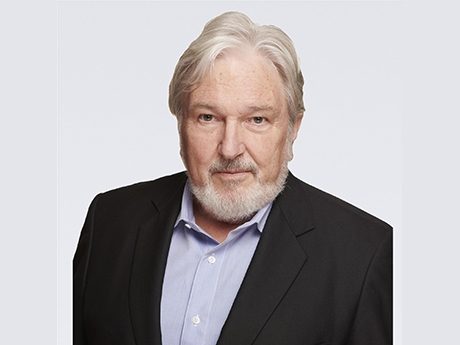
Paul Gordon, HansonBridgett
Legal Eagle Paul Gordon of HansonBridgett Reflects on His 50 Years in the Seniors Housing Business
313