
By Jane Adler
Seniors housing properties are aging almost as fast as the older population. The first baby boomers, who were born in 1946, turn 80 next year. That’s prime time for senior living. Projects from the first big development wave in the late 1980s are now approaching the 40-year mark — hardly prime time for a commercial building.
With construction starts remaining at historic lows, strategies are emerging to align the growing demand for senior living with an aging building stock.
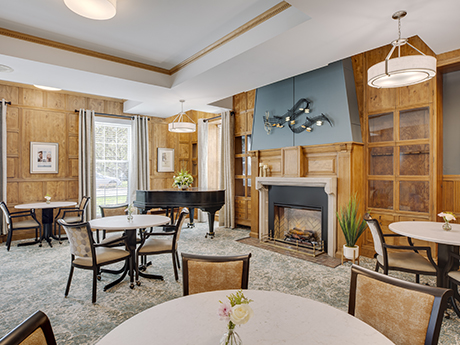
Owners are reinvesting in older properties. Full-scale renovations feature the latest amenities and large units — the kind of up-to-date features today’s consumers want.
Oftentimes, investors are buying older properties at a discount. The after effects of the pandemic coupled with the need for high capital expenditures and bank obligations can force a property sale.
The purchase of an older building for less than the replacement cost of new construction frees up investors to allocate funds for renovations.
Some older buildings are filling the affordability gap. Aging properties are being repositioned with relatively low rental rates to serve seniors with moderate incomes.
Many turnaround opportunities exist, sources say, but not all older buildings are earmarked for seniors. Some older senior living properties are being converted to other uses, such as for low-income housing or behavioral health facilities. Others are being shuttered.
Meanwhile, the big senior living owners are refreshing their portfolios. For example, publicly traded Brookdale Senior Living (NYSE: BKD), based in Brentwood, Tennessee, invested $5 million in 2024 for its “First Impressions” program.
Plans call for an additional investment of $10 million in 2025, according to a May 7 earnings conference call highlighting Brookdale’s results for the first quarter of 2025.
The program, which is designed to boost occupancies and rental rates, allocates funds for capital improvements that go beyond normal maintenance expenditures. The focus of the improvements is on updated common areas, enhanced landscaping and modernized interiors.
According to data compiled by the American Seniors Housing Association (ASHA). Brookdale is the largest operator of U.S. seniors housing. As of June 1, 2024, Brookdale operated 641 properties totaling 53,812 units.
“Older communities serve a valuable role in the spectrum of care,” says Jay Jordan, co-founder of Continuum Advisors, an investment sales and advisory firm in Tampa, Florida. “These are not broken models. More often, these buildings just need capital and a refresh.” (See sidebar)
Continuum recently brokered the sale of the Village at Gainesville, a 640-unit rental campus in Florida. Funds managed by affiliates of Dallas and New York-based Fortress Investment Group purchased the asset.
The seller was Sante Fe Healthcare, a nonprofit entity based in Gainesville, which had owned and operated the campus for 30 years, overseeing three development phases from 1986 through 2009.
Fortress plans a comprehensive renovation of the community’s oldest building, the
Lake House. The updates will include new plumbing, appliances and décor, according to the company.
The new owner also plans improvements to the memory care units, along with community-wide upgrades to the on-site amenities and facilities.
An Aging Stock
From 1980 through 2024, developers delivered nearly 950,000 seniors housing units in the 99 primary and secondary markets tracked by Raleigh, North Carolina-based NIC MAP.
As of the first quarter of 2025, more than half (51 percent) of all seniors housing inventory was over 25 years old. The older inventory totals more than 1.29 million units in the top 99 markets nationwide, including communities built before 1980.
Construction starts have slowed dramatically due to relatively high interest rates — the U.S. 10-year Treasury yield stood at 4.4 percent as of June 13 — and rising development costs.
For all of 2024, developers delivered just under 8,800 units of inventory across primary markets, according to NIC MAP. That’s only slightly more than the total number delivered in 2023 — signaling that construction activity remains lower than historical averages.
Meanwhile, demand is picking up as the big cohort of aging baby boomers begins to move into seniors living communities. The number of occupied seniors housing units set a new record at nearly 621,000 in the first quarter of 2025.
The mismatch between supply and demand should help fill older buildings with low occupancies, but it’s not that simple, says Arick Morton, CEO of NIC MAP. While some of the nation’s best performing continuing care communities are 100 years old, other aging properties are functionally obsolete, he notes.
Two factors contribute to functional obsolescence, according to Morton. For starters, a seniors housing community might no longer fit today’s business model that often includes some type of on-site healthcare.
Potential revenue may not be enough to support the operational intensity needed, explains Morton. “The property can’t carry the overhead,” he says.
The second factor is whether the property has the right features to attract new residents. Modern amenities are key, such as fitness and wellness centers and multiple dining venues.
The new customer wants big units. Studios with 400 square feet are more desirable than ones with 250 square feet. New residents often want one-bedroom apartments with 800 square feet or more.
But major property overhauls are expensive. “Renovations require a return on investment,” says Morton.
LCB Senior Living, based in Norwood, Massachusetts, views older buildings that haven’t been well taken care of as acquisition opportunities. “We are not afraid of older product,” says Danielle Breton, co-CEO of LCB.
The company owns and operates 41 communities in the Northeast. Most communities offer a combination of independent and assisted living, and memory care.
LCB also develops its own properties. Half of its portfolio was built in the past 12 years. The remaining half was acquired and dates from the 1980s to the early 2000s.
The big change in the past 10 years is unit size. “A lot of the older product is heavy on studios,” says Breton. “We shy away from those communities.”
Breton looks for acquisitions with adequate common area space to accommodate programming along with memory care units or units that can be converted to memory care.
There’s no difference in the overall performance between newer and older buildings, says Breton with one caveat. Big capital expenditures, like installing new windows or replacing roofs, must be undertaken for older buildings when necessary.
LCB bought the historic Paine Estate in Wayland, Massachusetts, in 2022. The original mansion on the property was built in the 1920s and had been converted to a senior living community. LCB completed a $5 million renovation of the 81-unit property.
The lobby was reconfigured, and the units were updated. The interiors were refreshed with new furniture, flooring and paint. The previous owner had closed the skilled nursing section, which LCB refitted to accommodate 15 memory care units.
Overall occupancy at Paine Estate is now about 90 percent. The average monthly market rate rent for a one-bedroom unit is $9,445.
Turnaround Opportunities
Over the past 18 months, Focus Healthcare Partners has invested more than $750 million in seniors housing. Of that total, approximately $425 million has been invested in repositioning strategies.
Focus currently owns approximately 30 senior living properties and recently closed on the $86 million purchase of The Harborside, a continuing care retirement community in Port Washington, New York.
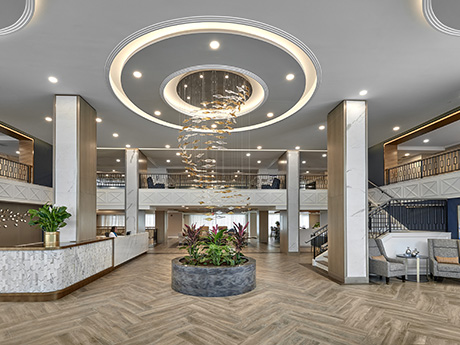
The property, which opened in 2010, was purchased out of bankruptcy. Focus plans to invest $28 million in upgrades at the property, which will be operated as a rental community.
Functionally obsolete buildings are not part of the strategy at Focus Healthcare. “Not every building works for us,” says Michael Feinstein, managing director at the Chicago-based firm. “In some cases, older buildings cannot be renovated to be relevant.”
Turnaround candidates must have large-scale common areas. Small units are a red flag.
Feinstein explains that combining small units isn’t always effective. The combination lowers the total number of units, making the building a less attractive investment.
“When evaluating turnaround opportunities, we look for communities that have great bones — strong common areas, solid structure, and a layout that can be adapted to modern resident expectations. Unit mix and size are part of the equation, but the overall potential for reinvention is what drives many of our investment decisions,” says Feinstein.
Reconfiguring the unit mix was a priority at The Virginian, a rental continuing care campus in Fairfax, Virginia, that Focus purchased in 2019. Built in the 1980s, the property had been owned by a nonprofit organization that was not reinvesting in the community.
The unit mix was wrong, according to Feinstein. The property had an insufficient number of memory care units and too many assisted living units. Another shortcoming of the asset was that there were no features to attract independent living residents.
The $67 million renovation cost more than the purchase price of the property, which was not revealed. The renovation included the addition of 38 beds in an upscale memory care wing, with monthly rents between $13,000 and $14,000. The assisted living component was pared down to 56 units, and about 150 units were dedicated to independent living.
Two different sections of independent living were created to appeal to the market. The concierge level, located on the top floor, featured its own dining venue, a bar and units with high-end finishes. The other independent living section offers lower rents that average about $7,000 per month.
Most of her renovation assignments lately have focused on updating senior living properties that are 20 to 40 years old. “Properties with good bones make good investment targets,” she says.
Perkins Eastman recently completed the redesign of several older properties owned by Ventas (NYSE: VTR), the giant Chicago-based healthcare real estate investment trust that ASHA ranks as the second largest owner of U.S. seniors housing. As of June 1, 2024, Ventas owned 797 properties totaling 80,281 units. The company’s market cap is currently $28.3 billion.
The 24-year-old Meadows community in Elk Grove, California, underwent a $2 million renovation. The community offers 82 assisted living and 24 memory care units.
The 19-year-old Sierra Ridge memory care community with 38 units underwent a $1.3 million renovation. “We did a full refresh of all the amenity spaces including furniture, artwork and lighting,” says Pinson.
In a year-end earnings call, Ventas reported that it had completed 228 “refresh” projects in 2024, including more than 150 employee breakrooms and more than 4,500 resident units. The company is on pace to complete another 50 such projects this year.
Pinson agrees that owners are prioritizing the expansion of units, reducing the number of studio apartments. But she advises, “Make sure you’re strategic about it.”
Storage space in one building, for example, was used to expand one-bedroom units into two-bedroom corner units. Combining units is easier if the plumbing is in the right place.
“Look at dining operations,” says Pinson. How does the space support dining operations? Designate a spot to store walkers and scooters. “It creates a very different vibe,” says Pinson.
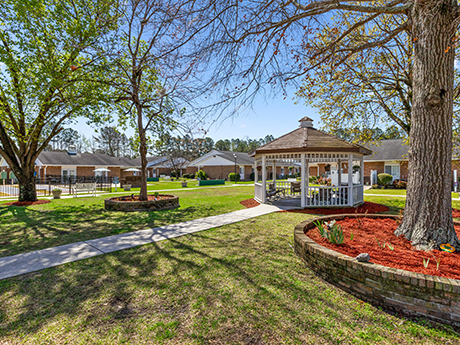
Older buildings are also helping to meet the demand for more moderately priced senior living options.
Merrill Gardens adopted this strategy with the launch of its Truewood by Merrill brand in 2021. In 2019, Merrill Gardens acquired Blue Harbor Senior Living, which owned 20 communities. Each property was about 25 to 30 years old.
Today, the Truewood portfolio includes 18 properties in 11 states with 650 team members and 1,850 residents. The average monthly rent at Truewood is $3,600.
Meanwhile, the average monthly rent at the Merrill Gardens MG-branded communities is $5,530.
“There’s a huge need to serve the middle-income market,” says Jason Childers, COO at Seattle-based Truewood by Merrill.
NIC first identified the middle market in 2019 with its breakthrough study, “The Forgotten Middle.” Researchers concluded that middle-income seniors have limited seniors housing options.
Childers says the Truewood model works for several reasons. The properties offer a flexible dining program instead of three meals per day. Breakfast consists of a reduced number of options.
“We were able to reduce the dining staff by about 30 percent,” says Childers. Residents and family members lead some activities, such as art classes, trivia events and jewelry making.
“We want to grow this market,” emphasizes Childers. A number of older buildings are on the market, he notes, but Truewood doesn’t chase every deal. “We’re picky.”
TJM Breathes New Life into ‘Older Assets’ in Central Florida
Older buildings represent a huge market opportunity. Just ask Matt Bradley, director of asset management at TJM Properties, an owner and operator of senior living properties based in Clearwater, Florida. “We target a true value-add asset,” says Bradley.
The strategy at TJM is fairly straightforward. The company buys older buildings at a discount, fixes them up and then rents the apartments to middle-income seniors at rates lower than that of luxury properties. Some of the buildings accept residents on Medicaid.
“There’s a need for communities at a lower price point as the population gets older,” says Bradley.
From February 2023 to February 2024, TJM purchased seven facilities with a total of 1,045 units. Five of the sales were brokered by Continuum Advisors.
The seven communities were built between 1960 and 2008. Four were built in the 1980s. Most of the buildings offer assisted living and memory care, along with some independent living units.
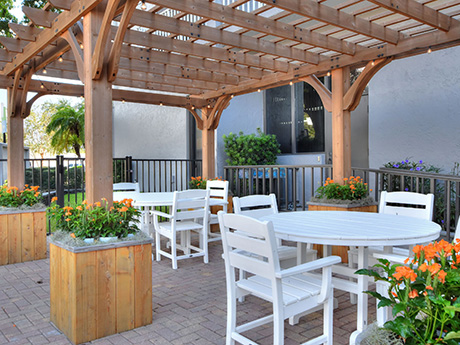
The communities are all located in central Florida. The sellers were national REITs. The average purchase price across the seven properties was $55,000 per unit.
“That’s well below what it would cost to build new,” he says, figuring the price was about 65 to 70 percent below replacement costs.
Most of the properties had negative cash flow at the time of the sale and the average occupancy was about 70 percent. “The properties were CapEx starved,” says Bradley.
An average of about $1 million per building was spent on renovations. Upgrades to the units included new flooring, windows and sliding glass doors. The buildings received new roofs and HVAC upgrades, while new landscaping was installed on the grounds of the property.
The interior and exteriors were painted. Lobbies were refurbished at some properties to improve the first impression. Renovations took about 12 months.
The seven properties now have positive cash flow and are 80 percent occupied on average and growing. The average assisted living rent is $3,500 a month. From an operator’s perspective, Bradley says that’s a healthy middle-market rent for the demographic being targeted.
“These are older assets,” says Bradley. “Things break more.”
The properties are all located within a two-and-a-half-hour drive of the Tampa Bay area where TJM is headquartered.
The previous operators were not based in Florida. TJM has its own management team on-site.
“It’s easier from a management standpoint,” says Bradley. Looking ahead, he says, “We plan to stay in central Florida.”
— This article originally appeared in the May-June issue of Seniors Housing Business magazine.