
By Hayden Spiess
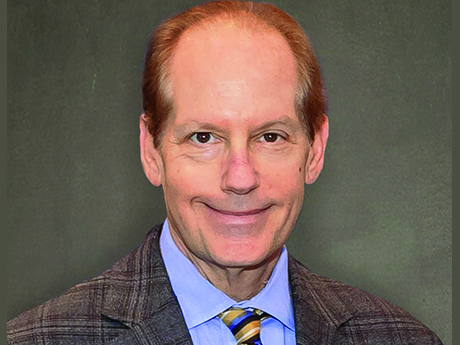
Despite the trials and tribulations that the senior living sector has endured during the past decade, David Schless, president and CEO of the American Seniors Housing Association (ASHA), is bullish on the near-term outlook for the industry.
“The COVID era was really as difficult as any period,” acknowledged Schless during a keynote interview at the ninth annual InterFace Seniors Housing Northeast conference on Dec. 4. The event drew more than 240 seniors housing professionals to the Live! Hotel Philadelphia.
Nevertheless, Schless has abundantly positive expectations for the industry in 2026. “We’ve worked through most of those issues,” said the veteran executive. “It’s hard not to be optimistic at this juncture.”
Throughout the interview conducted by Seniors Housing Business Publisher Richard Kelley, Schless shared his reasons for optimism, described how much the sector and ASHA have grown and elaborated on why he thinks the industry should invest more in advocacy efforts.
Humble Beginnings
The seniors housing industry, along with its economic prospects, has seen exponential growth during Schless’s tenure in the business. When ASHA first began collecting data in the 1990s, the nascent senior living sector looked very different than it does today, he emphasized.
There were different struggles in the industry at that time, according to Schless. Despite the fact that occupancy was strong across most of the properties, Schless said that buildings were struggling financially. “Occupancy was at maybe the low 90s [percentage-wise], and yet a lot of these buildings were not covering their debt service.”
According to Schless, there was concern that seniors housing might not be economically viable. “There were a lot of doubts about whether you could actually make money in seniors housing.”
Those doubts may seem far-fetched today. As Kelley pointed out, the seniors housing industry is now worth billions of dollars.
Likewise, ASHA’s inception began with very few members, noted Schless. “We would have 10 to 15 people sitting around the table,” he recalled. “That was really the beginning of ASHA.” The entity was founded as the Seniors Housing Committee in 1991 under the National Multifamily Housing Council (NMHC), became a separate but affiliated organization in the 1990s, and formally separated into an independent association in 2001.
Today, the number of participants at events totals approximately 850 to 900 industry professionals.
ASHA has also begun its foray into consumer education, with its proprietary lead aggregator website, Where You Live Matters. “We see that there is absolutely an opportunity to provide lead aggregation that is better aligned for the interests of the consumers, the owners and the operators,” emphasized Schless.
In addition to serving consumers and shaping the narrative around the senior living industry, Schless said that Where You Live Matters can also address the pressures of expenses. “The industry is spending several hundreds of millions of dollars on online lead aggregators,” he explained. “There is a financial opportunity to do all of this much better.”
Advancing Advocacy
One area that stands to see further growth, in the eyes of Schless, is that of political and legislative advocacy, particularly at the state level. “There’s a lot that happens at the national level, but at the state level, I think it’s a mixed bag,” he observed.
Schless explained that it is in the best interest of the industry to remain regulated at the state level, but that this requires engagement and effort. “You’ve got to make sure that the states are proactive and working to modernize the assisted living regulations,” Schless continued.
The level — and quality — of regulation varies throughout the country. “Even in some states that have very good state associations, like Pennsylvania, assisted living regulations haven’t been touched in over two decades, and that is not necessarily a good thing for the industry,” said Schless. “There is a lot of work that needs to be done.”
At the federal level, ASHA’s work includes extensive advocacy on Capitol Hill, and ASHA’s website features a section dedicated to its legislative advocacy program. “We’re up on Capitol Hill almost every day when Congress is in session,” divulged Schless. Referencing the One Big Beautiful Bill Act signed into law in July 2025, Schless added, “the tax bill was something that we were very focused on, and there are a lot of good things for our industry in that tax bill.” One positive included in the legislation was making the 20 percent qualified business income deduction for pass-through businesses, including partnerships, permanent.
ASHA’s other issues of interest include immigration and workforce reform. “We’ve been working on the workforce issues for several years,” pointed out Schless. “We’re not going to get immigration reform done right now — it’s not going to happen in this current administration or the current environment.”
Looking Ahead
Workforce struggles aside, Schless noted that there are still a number of other economic headwinds for the industry to contend with, including strained legal and insurance environments and the challenging capital markets.
Schless also cited increasing levels of acuity as a test for owners and operators. “We’re taking care of frail individuals and dealing with their families. They have become infinitely more challenging than they were 30 years ago.”
These headwinds do not dampen the leader’s outlook, however. In short, “the demographics suggest cause for optimism,” he noted. These demographics are largely buoyed by baby boomers, the oldest of whom turn 80 this year. The generation comprises a sizeable cohort. According to the U.S. Census Bureau, there are 76.4 million baby boomers.
Even so, Schless cautioned that senior living is a complex and challenging business and that positive outcomes will not come without effort. Despite ASHA’s origins with the NMHC, Schless reminded the audience that seniors housing properties are much more operationally intensive and complex than their multifamily counterparts.
“These are not apartments,” emphasized Schless. “It’s a complicated business, and it’s never going to be an easy business. It is not a business for the faint of heart.”