
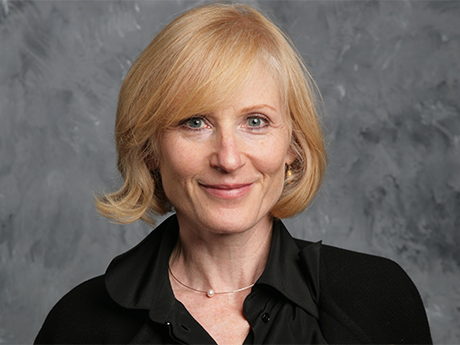
Talya Nevo-Hacohen has yet to slow down — both literally and figuratively. An accomplished runner who logs 70 miles a week, Nevo-Hacohen recently retired from Sabra Health Care REIT, where she served as chief investment officer for just over 15 years, through December 2025.
Nevo-Hacohen joined Sabra in 2010, the year of its inception, following an eclectic early career that included roles with Goldman Sachs, Healthpeak Properties (then HCP Inc.) and Cerberus Capital Management. During her tenure at Sabra, Nevo-Hacohen was instrumental to the company’s growth, which has been significant. In the 2025 American Seniors Housing Association (ASHA) rankings of the 50 largest owners and operators, Sabra ranked as the 17th-largest owner, with 9,200 senior living units in its portfolio.
Nevo-Hacohen, who reports that she is as busy as ever, will continue to serve Sabra in a consulting role over the next two years. Seniors Housing Business recently spoke to the former senior living executive to hear more about her history with Sabra, her thoughts on the seniors housing industry and her plans for retirement.
SHB: You helped Sabra Health Care REIT (formed in 2010) grow from a newly formed REIT with 86 properties leased to a single tenant (Sun Healthcare Group) into a $6.5 billion enterprise with 399 investments. Did you foresee Sabra evolving the way it did when the company launched, and what did you learn most either about yourself, the people you worked with or the industry?
Nevo-Hacohen: I think the most interesting thing about the growth trajectory, when you think about it, is that we didn’t grow linearly. We didn’t just grow by acquiring slowly and gradually. There were times when our stock price was such that we had really good cost of capital and could be more aggressive. There were also times in which we were less aggressive, when it was harder to acquire assets and to grow.
We also executed a merger and did some other substantial, larger deals.
Then there was the pandemic, which no one could have forecast. Over 15 years, there were a lot of unexpected things, and there were times when anybody on the team would have said they had some sense of control over what was going on, and then there were times in which there was far less sense of control.
The latter was particularly true during the pandemic. It was a journey for the company and certainly for investors as well. We learned a lot, and we tried new things.
Early on, we began doing some development joint ventures and development with senior housing operators.
It took us a while to adopt the RIDEA structure because we felt that you have to have a different level of focus and attention when you own the profits and losses of those facilities. So, it was a different level of scrutiny and knowledge and detail that we needed to be able to apply. We made that leap at least 10 years ago.
It was a leap because it was psychological, too. When you own a net lease portfolio, it’s limited to the rent. So, there is not a lot of upside, and there is 100 percent downside. In the risk equation, you’re always managing the downside risk. You’re never looking at the upside opportunity, because you don’t have access to it, by definition.
When you move into management of seniors housing as an owner, you have all of the upside and all of the downside. So, the risk equation is different. You want to be focused on what’s happening in as timely a manner as possible, so that you can ensure that there aren’t things that are being missed.
In a RIDEA structure, you can’t be actively managing the asset under the tax regulations, but you want to be sure that your manager is and that they’re properly incentivized, so that there is an alignment.
So, it is quite different from a risk perspective and an opportunity perspective, and therefore the relationship with the operator is also different. Most net-lease tenants view these leases as a financing and that’s it, and so they effectively treat you kind of like a lender.
That shift in mindset, shift in approach and shift in understanding the risk was something that we evolved over time.
SHB: Sabra is a publicly traded company — being publicly traded has its own complexities. Is there a learning curve associated with that?
Nevo-Hacohen: Our CEO had run several public companies.
I have worked for public companies, and I have, for years, advised public companies from the initial public offering stage through their life cycle and capital growth. So actually, I’m much more familiar with the public company format than I am a private company.
SHB: What event or series of events led you to become employed by Sabra Health Care REIT?
Nevo-Hacohen: That’s a little bit of a funny story, which I share with people when I talk about career paths, because serendipity is something that really does happen. You can’t plan for it, but you can hope for it.
I had been working for private equity firm, and I had left, and I had some family matters to deal with — aging parents and that kind of stuff. I spent a few months doing that, and I was just starting to think about finding a full-time job again.
I’m in Southern California, and I don’t have a deep network, and I see an announcement that Sun Healthcare Group was spinning off its real estate and forming a REIT. I thought, ‘Wow, I know a lot about REITs.’ I’ve been in the REIT world since 1993 and have experience with all kinds of REITs and worked at a healthcare REIT for several years.
I thought, ‘I’ve got to figure out who this company is.’ The press release said that the company was going to have a conference call for investors, and I thought, ‘Well, I’ll just dial in and listen to this story, because this is in my neighborhood, and this could be interesting.’
So, I dial into the investor call, and [Sabra Health Care CEO] Rick Matros is talking about the plan, and the research analysts start asking questions. I know these research analysts because when I worked at a healthcare REIT, they covered my company, and I dealt with them a lot.
I’m listening to these questions, going, ‘Wait a minute — I gotta find out who this group is, and maybe I should be talking to them.’ I emailed one of the research analysts who was asking a question, and I asked, ‘Should I be talking to these guys?’ He knew I was looking for a job, and he wrote back and said, ‘Absolutely, yes.’ He gave me the phone number for Rick Matros; I think it might have been his direct line.
I call after the conference call, and he picks up, and I say, ‘You don’t know me, but you should because you should either hire me or have me on your board.
And that’s how it started.
SHB: Early in your career, you were an architect in New York City. What led you to make a career switch and go into investment banking at Goldman Sachs? Over the course of your career, did the architectural background come in handy on the acquisitions, finance and development front?
Nevo-Hacohen: I think that everything you do in life, even if it’s not successful, brings you to the place where you are today. Studying architecture was something I enjoyed. Architecture school was very much about learning how to think, analyze, synthesize and solve complex problems in three dimensions. What I have done in my finance career is solve complex problems that are multi-dimensional.
So, the training for architecture was actually very applicable, even though the medium in which I was dealing as an architect, which is physical, was not the medium I dealt with when I was in finance.
What I learned about architecture as a trade and through practicing as an architect meant that I got involved in every space-planning exercise at every firm — so that anytime we would move, I would be involved in how to lay out the offices, plus I could read a plan. So that was that was useful, too. To the extent we were doing development or we were looking at a development project, I could also offer a quick assessment.
SHB: There is so much terminology to architecture; it has a very unique vocabulary.
Nevo-Hacohen: Finance has its own vocabulary too. I remember when I was in my first couple of months at Goldman Sachs. I had already gone to business school, and I had done well in business school. I remember sitting in our departmental meeting at Goldman Sachs during the first several weeks, as everyone would go around and talk about what they were working on, and I remember thinking, ‘I understand the individual words people are saying, but I cannot understand what they’re talking about.’ It was such a specific language.
Architects are prone to flowery language, and finance people have their own language, and I’m sure every other industry has its language too.
SHB: What have been the most notable changes in seniors housing since you first entered the industry, and what changes do you anticipate that we might see in the years ahead?
Nevo-Hacohen: Seniors housing has changed a lot.
Skilled nursing has become more sophisticated and more complex. That sophistication is very much a good thing. You’re able to take care of patients that 20 or 30 years ago you couldn’t have taken care of in a skilled nursing facility. That’s extraordinary and great for an industry, in terms of its evolution of what it can do and how it adds value to its customers.
Seniors housing is actually right behind skilled nursing in that and is increasingly more sophisticated. I remember the first time I toured a senior housing facility over 20 years ago, and it was more like an apartment building for older people. There were no wheelchairs or scooters. People were quite able-bodied.
If you walk into an assisted living facility today, you will see what is effectively a private-pay nursing home. There will be residents who are in hospice there. There will be residents who are on oxygen there. There is nursing staff, at least part time if not around the clock.
Seniors housing has shifted from a hospitality focus to a care-based model.
It is an evolution that continues. Some operators have embraced care, and some have not. It requires a level of sophistication and a willingness to take on a different risk profile, both in terms of the residents and what you provide them.
Typically, it also requires a more sophisticated financial model. You have to assess and understand who your residents are and what their needs are and how you manage their wellness for the best outcomes.
That’s been a big evolution in seniors housing, and there are operators that have taken that on very well. There are other operators that have shied away from that and want to focus on more of a hospitality model. The hospitality models have what is appealing to the consumer because no consumer wants to walk in and think he or she is going into the nursing home, right? No one wants to go to a nursing home.
So, it’s a bit of a conundrum. You have to do a lot of different things really well — to persuade consumers to move into your seniors housing community and to provide them with both support agency, as well as enjoyment in daily life.
It’s not a simple equation.
SHB: You mentioned how much more complex skilled nursing is. Is it that the financial aspects of the business are complex, or is the complexity in the care, the equipment and the medical side of things?
Nevo-Hacohen: All of the above.
First of all, skilled nursing operators are fundamentally a very smart group of people because they handle very complex medical situations, and to get paid, they have to manage a very sophisticated and challenging matrix of reimbursement that shifts every few years. In my career, there have been multiple shifts, some more subtle and some seismic. There has to be a level sophistication on both ends of that in order to be successful as an operator.
In addition, you have to operate a large team at a building or multiple buildings that are able to manage what is going on, both financially and operationally.
It is a very complex business and challenging in many ways, and I believe it can be very rewarding as well.
SHB: Going forward, what changes do you think we might see five or 10 years down the road?
Nevo-Hacohen: I think they’re all technology related. We’re really on the cusp of — actually, we’re past the cusp, we’re in it. We just don’t know how much technology and AI are going to impact us and exactly how.
I think the opportunity for that impact is huge across healthcare in general.
In seniors housing, there is an opportunity to provide residents with a sense of their own agency. One of the biggest challenges for people moving into seniors housing is a sense of giving things up. They’re giving up their home. They’re giving up their independence. They’re giving up their friends. They’re giving up the way they used to live. There are opportunities with technology to give people a greater sense of independence, which I think is really important for them intellectually and emotionally.
There is also an ability to monitor key metrics and make sure that while residents feel independent, they are not alone. They are supported, but they don’t need to have someone hovering over them to be supported. It doesn’t have to be that intrusive.
As a generation, boomers — who are moving in — are far more tech-savvy than the prior generation, and I think that’s going to impact how things happen. They’re going to be much more open and willing to interface with technology in all kinds of different ways. Who doesn’t have a cell phone now, right? And who doesn’t text?
The way people communicate, the way people are supported, the way staffing of labor is managed to be more effective and efficient and the customization of everything is going to be easier with technology and AI.
That sense of agency for residents or patients is going to make for a better experience.
SHB: We have seen a lot of operators being swapped out over the last several years. Is that a function of the pandemic, which inevitably led to change? Is the churn factor more pronounced today than it has been historically?
Nevo-Hacohen: I don’t think it’s COVID; I think that it’s the speed of recovery emerging from COVID that has driven a lot of the change.
I think every owner is looking at how much growth they’ve got. Have they grown ahead or behind their competition and others in the market? Could they or their manager be doing better? Maybe that’s in the realm of better marketing, better customer acquisition or better retention of staff and residents.
There’s a lot of things to juggle, for an operator
The owners are looking for 95 percent occupancy. The thought is, ‘NIC says we’re going to be full by 2020 or 2030, so why are we not full yet? Why are we still at 82% occupancy?’
So, the speed of recovery, I think, has really been the question — speed of recovery on occupancy and speed of recovery of net operating income.
SHB: You are still a relatively young woman, but have you given any thought to the type of seniors housing product you’d like to live in someday when the time comes for that transition in life? What type of community interests you?
Nevo-Hacohen: Having been in that position where I had to address aging-parent matters and move my mother into assisted living and memory care, and having friends that have gone through or are currently going through that process, it’s a topic of conversation in a way that it certainly wasn’t 10 years ago.
I think that the single most important piece would be that I want to make the choice. I don’t want someone to choose for me, which means I need to plan ahead. And that goes to this concept of agency. I want to have the life I want to have. I don’t want to have it imposed upon me.
I think that’s going to be a really critical point for the boomer generation. This is a generation that burned their bras and protested the draft. I don’t think they’re going to be told what to do and just nod their head. They’re going to want something that is for them with as much control as they can have over it.
I’m a vegan, so I’m not going to go someplace where they are going to put a Monte Cristo sandwich on my plate, and that’s my choice for lunch. I want to choose, and I’m going to have to choose at some point in advance so that I’ll be ready when I need to execute.
SHB: Earlier this year, I read that you run 70 miles a week and have run several New York City marathons. How many marathons has it been?
Nevo-Hacohen: I’ve done seven.
After a bunch of injuries last year, which took their toll, I am back to 70 miles a week, so I’m happy about that.
It’s therapeutic for me.
SHB: What exciting plans do you have in store for your retirement?
Nevo-Hacohen: Traveling. I have a bucket list of travel plans.
I have found myself to be surprisingly busy with the commitments I have to several nonprofits in which I’m involved. I chair two nonprofit boards right now, and I’m on a few other boards, including the corporate board of a public company.
— Interview by Matt Valley