
By Hayden Spiess
Baby boomers, who form the incoming wave of seniors housing residents, have witnessed remarkable — some might say dizzying — technological leaps in their lifetimes. Born between 1946 and 1964, baby boomers have begun to turn 80 this year. The oldest among the generation were born even before the microwave had been brought into existence (in 1947).
Now, fewer than 100 years later, innovations have enabled everything from artificial intelligence (AI) capable of carrying on conversations to self-driving cars.
Senior living specifically has seen its own surge of new technological solutions designed to serve those same aging adults.
“There are a lot of technology things happening,” reports John Shafaee, co-founder and chief executive officer of Medtelligent, a technology company that services seniors housing exclusively. “Our product is called ALIS,” says Shafaee. “It is an electronic health record that is designed, purpose-built for independent living, memory care and assisted living.”
Though Medtelligent has existed for 20 years, Shafaee and other leaders within the field say that seniors housing technology platforms are now able to help solve quandaries within the sector and benefit both residents and providers like never before.
Caregiver Crunch
One of these issues involves the imminent abundance of older adults. Much of the discussion surrounding the so-called silver tsunami centers on the shortage of units in which to house potential senior living residents. There is another gap that must be considered, says Brian Geyser of Inspiren.

“The older-adult population is growing exponentially,” notes Geyser. “There are going to be far too many older adults for the current population of caregivers to care for.”
Geyser, who is the head of clinical innovation at Inspiren, is a nurse practitioner with a wealth of experience in senior care and a unique understanding of the demands placed on caregivers.
Inspiren’s offerings include solutions for emergency calls, resident safety, care planning and enhancing staff efficiency. Considering the upcoming influx of seniors housing residents, Geyser says that meeting their needs will be a tall order. “The only way that we’ll be able to do it, and do it well, is through advancing technologies,” he asserts.
Many other senior living technology companies and platforms are also working to serve this agenda.
Vayyar Care is one of these companies. Jessica Wesley, head of Vayyar Care North America, also has prior experience within the seniors housing sector. “Previously, I was an operator in senior living,” she shares. “One of the things I try to bring to the table is putting on the lens of the operator and how we take technology and use it to benefit the operator from a financial standpoint and enhancing care and eliminating risk as much as possible.”

Vayyar partners with senior living providers including Senior Lifestyle Corp., Bridge Senior Living, Heritage Senior Living and Hebrew Senior Life, among others.
Wesley’s understanding of community operations helps inform Vayyar’s caregiver support at the communities it serves. For instance, Vayyar technology not only proactively reminds workers of required, timed resident checks through its caregiver interface, the system verifies whether a caregiver has entered a given resident room and completed the check as scheduled.
“Nurses could get called away to something else and get distracted,” outlines Wesley. “If the caregiver does not come into the room, the system will resend that alert so that the caregiver team will have to come back to that resident, and it won’t go away.”
Empowering caregivers is also top of mind for Medtelligent. “Individuals who are delivering the care now have access to a lot of information right at their fingertips,” Shafaee shares of ALIS. “They can quickly see what they have to do today.”
Shafaee reports that through ALIS, workers can immediately view the specific needs of each resident. “The net effect is an increase in length of stay, resident satisfaction and increased staff satisfaction.”

In the decades since he founded Medtelligent, Shafaee has observed the senior living sector shift from a hospitality focus to an increased emphasis on clinical care. ALIS has met this evolution with provisions including care charting, incident tracking, pharmacy integration and move-in paperwork.
ALIS also ensures connectivity with healthcare providers. “When a physician comes to a community, their notes are automatically showing up in ALIS,” explains Shafaee. “You see this integration and a reduction of effort and staff for manual data entry.”
In addition to clinically centered offerings, ALIS provides a host of other operational and financial solutions such as customer relationship management (CRM), move-out predictions and investor reports.
Safety Solutions
Many senior technology platforms are, naturally, designed for optimizing resident safety. Entities like Inspiren and Vayyar utilize tools like cameras and sensors in resident rooms to help detect and prevent falls and other negative outcomes.
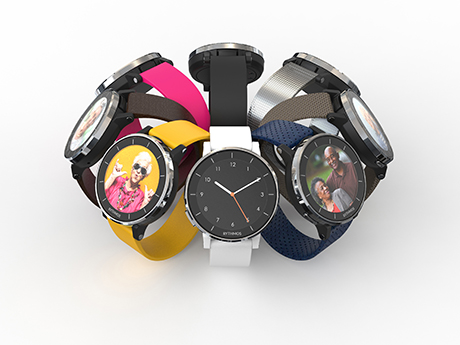
Intrex, a company that provides safety and wellness solutions for senior living communities, also employs cameras and sensors to prevent falls and ensure resident safety through its Rythmos system, which also provides nurse call capabilities, access control and wander management. According to Ted Tzirimis, founder and chief executive officer of Intrex, the platform’s fall-detection technology boasts an accuracy rate of over 96 percent.
“There’s been more of a focus on camera-based solutions,” Tzirimis asserts. “There’s been more of an appetite to look for solutions in the apartment, where a majority of falls occur.”
Ascent Living Communities employs Inspiren’s camera-based system, AUGi. AUGi provides monitoring and safety alerts. Tom Finley, chief executive officer of Ascent, founded the senior living owner and operator, which offers independent living, assisted living and memory care, in 2008.
“Families love the fact that we can have this eye on residents even when we’re not in the apartment,” relays Finley.

Finley shares that the AUGi system has been particularly transformative in the context of memory care, wherein residents might not have the cognitive awareness to accurately recount their own falls.
According to Finley, AUGi helps reduce unnecessary hospitalizations for residents suffering from dementia, who could say that they have hit their head when they have not. “Now, we can look at the footage, and we know definitively if they hit their head,” he explains.

Wesley says that Vayyar’s fall prevention technology yields impressive results. In one community, there was a 45 percent reduction in falls among high-risk residents throughout the community, and a 66 percent reduction in falls of high-risk residents within their own rooms.
Medtelligent’s technology offers detection of another kind. Within ALIS, a tool dubbed the Move-Out Predictor scans data for irregularities and changes in resident condition, flagging such residents for staff evaluation.
In one case, Shafaee says that this tool was able to identify a hairline hip fracture that had been previously overlooked. ALIS identified that there was an issue through changes to the resident’s pain management regimen, and other notes fed into the system.
“We noticed it and alerted on it, and we were able to route that resident to get some treatment,” recounts Shafaee. “In my opinion, we avoided a hospitalization or a fall or something even worse.”
Intrex tracks physiological markers as well. The Intrex suite of technology includes integrated sleep mats that can sense quality and duration of sleep, heart rate and other metrics. Sensors within the apartment also track information like the number of times a resident uses the bathroom.
Tracking resident care and acuity can also help operators increase efficiency and avoid lost revenue. “If we see that staff are spending more time in the resident’s apartment, it may trigger us to say that there’s a change happening and have a care conference,” details Finley. “We need to see if there are some care activities that we’re delivering where we are not capturing those charges.”
Privacy is a Priority
With the new prevalence of camera-based safety and care systems in communities, privacy can be a concern for residents.
Many senior living technology solutions are designed with this in mind. “Our system is built with privacy protection at its core,” says Geyser of Inspiren. “While staff members who are authorized to log into in the system do have visibility into the resident’s apartment, what they see is a blurred visual image.”
Wesley says that the Vayyar platform is set up to permanently record and show only 10 minutes of footage once the sensor has detected that a fall may have occurred, rather than operating on constant surveillance, which would likely be less palatable to seniors.
Finley also says that residents are offered the choice to opt into (or out of) Inspiren tracking, though he believes only one person has ever opted out of being included in the Inspiren system.
There is always a tradeoff involved in safety and privacy, adds Tzirimis. “It’s always a balance between how much privacy you want to give up for how much safety you can get back in return,” he acknowledges. “We try to offer a lot of different types of solutions. If they’re happy having a camera in the apartment, that’s obviously a bit more precise than just a wearable for falls.”
Working With (or Without) Wearables
Wearable devices are perhaps one of the oldest and most recognizable senior safety technologies. Who cannot recite the “Help, I’ve fallen, and I can’t get up” line from commercials of the ’80s and ’90s?
Wearable pendants still have a place within senior living, but they are inherently limited and are best used as complements to other technologies and within larger systems, say sources.
One of the limitations of wearable devices is as simple as the fact that they may not actually be worn. “Wearables are tricky with older adults,” says Geyser. “They often don’t wear them, or they forget to put them on, so our system is less dependent on wearables. We’re turning the environment into the system itself.”

Tzirimis concurs that wearable technology can only help so much, adding that a system relying purely on these devices can create false positives because it’s difficult to know whether a resident has fallen or simply plopped down into a chair.
“My dad has an Apple watch, and he oftentimes will get a notification asking if he had a fall when he’s just washing the dishes,” he shares. “If Apple, with its billions and billions of dollars hasn’t solved fall detection, no one else is going to solve it yet.”
One benefit to complementing other solutions with wearable devices though is the ability to monitor residents throughout (and even outside of) communities, says Tzirimis.
“With our wearable, if an individual leaves the apartment, there is a real-time location,” he elaborates. “It’s moving with them as they go to different rooms, go to activities and spend time with other folks and even care staff.”
Cohesion is Critical
As impressive as the progressions in senior living technology have been, experts say that there are still more strides to be made. Vendors and operators alike share that a lack of integration between different technologies and platforms remains a roadblock.
“The challenge is still so many disparate systems that don’t work together,” emphasizes Tzirimis. “That’s to the detriment of the seniors because it leads to poor care.”
“One of the gaps in senior living is that there are great systems, but they’re not all talking to one another,” agrees Wesley. Vayyar has tried to address this gap by developing its own language model, similar to Chat GPT, into which all data collected at communities can be fed.
Caregivers then have the ability to ask questions of the platform to identify specifics like whether a resident has had a change in medication.
Medtelligent strives to avoid the complications of unintegrated systems. “We are one of the only applications that is single source with all of the pieces connected,” says Shafaee of ALIS.
Finley similarly says that Inspiren was attractive to Ascent Living because it integrates well with other systems.
Tzirimis believes that improving the cooperation between different systems will benefit residents, the primary goal of all senior living technologies. “I’d like to see more openness,” he says. “Hopefully, we’ll get there at some point and break down more of these silos.”
— This article originally appeared in the February-March 2026 issue of Seniors Housing Business magazine.