
By Taylor Williams
From an investment standpoint, there is plenty to like about active adult.
The fundamentals are undeniable. Relative to traditional seniors housing and multifamily product, there is a limited amount of competition on the supply side of the active adult space, making it appealing to investors that have been priced out of conventional senior living and apartment deals.
Editor’s note: InterFace Conference Group, a division of France Media Inc., produces networking and educational conferences for commercial real estate executives. To sign up for email announcements about specific events, visit www.interfaceconferencegroup.com/subscribe.
The adult rental market is relatively small and recently built, according to NIC MAP, which tracks the sector. Nationally, there are approximately 875 active adult properties with a total inventory of 129,000 units. The median age of the properties is nine years. By comparison, the National Multifamily Housing Council estimates the total U.S. apartment stock at 23 million units. The median age of the U.S. rental housing supply was 45 years as of 2024.
Lease retention rates tend to be strong within the active adult sector even though residents often pay a premium to rent these age-restricted units — another tailwind in and of itself. And the demographic trends driving occupancy within active adult properties are very promising in terms of the growing cohort of American seniors.
Yet investors that actively target these properties have come to accept that — like everything else in this world — there are strings attached to quality deals. In this case, the primary hiccup to achieving strong yields on active adult acquisitions involves the path to stabilization.
Inherent Challenges
For reasons that are both qualitatively obscure and difficult to quantify, active adult projects tend to carry lease-up risk, even when backed by top-tier marketing, staffing and programming. And that’s precisely the obstacle that investors must often overcome to maximize their return on investment.
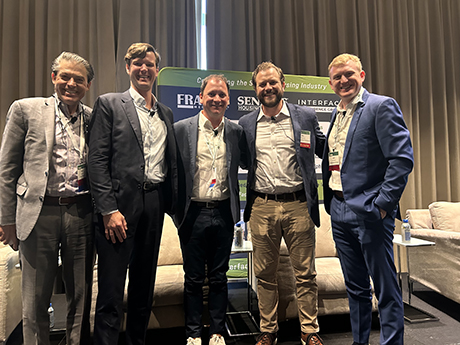
During the sixth annual InterFace Active Adult conference, which took place on April 30 at the Renaissance Dallas at Plano Legacy West hotel and attracted about 300 industry professionals, a panel of active adult investors made no secret of this dynamic.
In fact, the investment panel wasn’t even the first to address the issue, as a group of executives on the “power panel” that spoke at the beginning of the conference also identified lease-up uncertainties as the biggest investment risk in active adult.
That group noted that lease-up periods tend to overlap with final phases of construction, as well as times in which certain operational issues are still being ironed out. The result, however temporary, can make for a period in which cash is flowing out much more quickly than it’s coming in.
Matt Pyzyk, managing director of acquisitions at Chicago-based private equity firm Green Courte Partners, was the first member of the investment panel to speak directly to this risk-reward aspect of the sector.
His analysis began with the assertion that because most active adult product in the United States has been delivered within the past five to 10 years, there is minimal opportunity for value-add plays as a means of enhancing resident experiences and driving leasing velocity.
“The most value creation — and the most risk — is on the lease-up side,” said Pyzyk. “We’re seeing spreads of nearly 100 basis points between core trades [of properties] with stabilized, durable cash flows and other value-add opportunities because there’s additional risk on lease-up.”
Programming, Operations Are Pivotal Factors
Pyzyk’s analysis also implied that while traditional multifamily product represents an essential need, active adult is somewhat more of a luxury.
Occupancy in active adult hinges more on programming and operational competency, which are inherently fickle and subject to change, noted Pyzyk. Consequently, owners should not expect to see the same level of rapid stabilization.
“You have to be forward-facing with your resident base and create social programming [in active adult communities], so the operating side [of the business] can often be what gets these transaction that have stalled out or have middle-tier occupancy levels over the hump and create that extra value,” advised Pyzyk.
Eli Chester, senior director of investment at Blaze Capital Partners, an investment and development firm based in Charleston, South Carolina, immediately echoed the observation that smart, effective lease-up strategies are key to unlocking value in active adult projects. He also said that even when an initial lease-up campaign is successful, there’s often still meat on the bone when it comes time to renew. That’s part of the beauty of active adult.
“We have some [active adult] deals in our portfolio in which we have a non-active-adult operator that leased it up, but there’s still some rent left on the table,” said Chester. “That creates some additional upside. But by and large, to really get that pop and be in that upper 5- to 6-percent [cap rate] range, the lease-up is the critical piece.”
Factors Affecting Lease-Up
At the prompting of moderator Mark Myers, partner in the seniors housing division of Kiser Group, another Chicago-based investment firm, Chester elaborated on other types of non-operational issues that can slow lease-up in active adult communities.
Chester stated that stalled leasing campaigns could stem from a range of variables, including unit layouts that don’t fit the wants of residents, faulty underwriting assumptions or larger economic issues that are endemic to a certain market. Other times, he added, these deals just need more time.
“The assets typically perform fine; they just didn’t absorb as quickly as people expected,” Chester concluded.
While owners are justified in troubleshooting sluggish lease-up initiatives, Pyzyk argued that changing operators mid-campaign is typically not the best solution, even if owners determine that the operator is a big part of the problem.
“This is such a people-driven business; it’s so hard to just step in and change the faces. The maintenance guy, the person at the front desk — these people are such big parts of the resident experience. Changing out those faces and rebuilding the brand sets your business plan back,” emphasized Pyzyk.
“With the deals in lease-up that we’ve taken on, we’ve found that the time [it takes] to get occupancy back moving in the right direction is longer than we expected,” pointed out Pyzyk, “because it’s so hard to build that foundation for a leasing pipeline with new staff.”