
Seniors housing operators are rethinking what success looks like. Filling units may no longer be the hardest part; helping residents thrive in one community for the long term is.
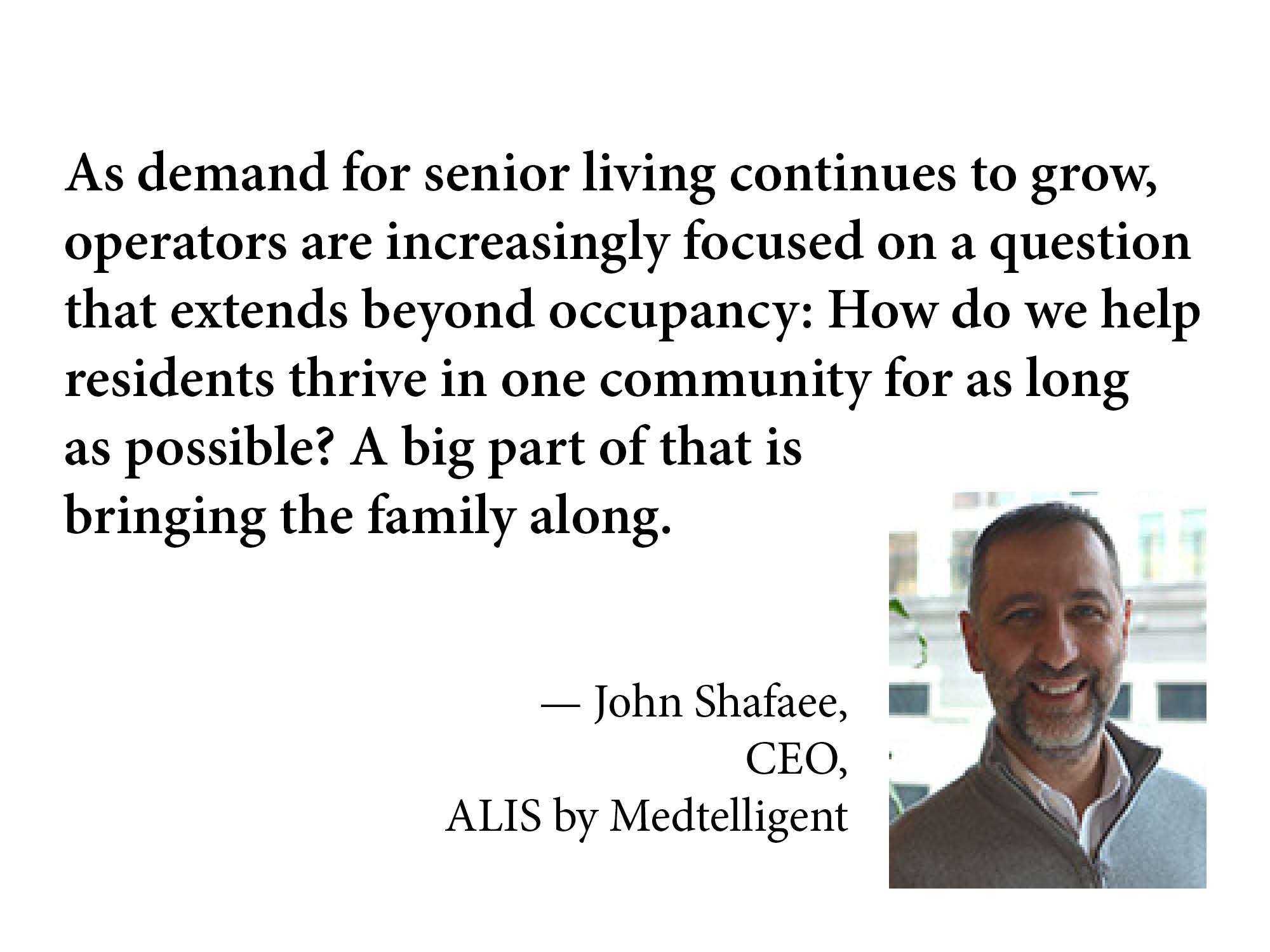
“As demand for senior living continues to grow, operators are increasingly focused on a question that extends beyond occupancy: How do we help residents thrive in one community for as long as possible? A big part of that is bringing the family along,” says John Shafaee, CEO and co-founder of ALIS by Medtelligent, a seniors housing software provider.
The financial case is clear. Each move-out interrupts the rent stream and triggers costs to refresh, refit and market the unit. Longer stays protect income stability, affordability and net income targets.
Length of stay also reflects how connected families feel to their loved one’s care. Informed families stay confident, and they help care teams catch health and safety changes earlier.
So, what do families want? Increasingly, the same things they get everywhere else.
Keeping Pace with Family Expectations

Consumers have grown accustomed to technology keeping them informed about the things and people they care about, often in real time. That experience is reshaping what families expect from seniors housing, says Julie Bastien, ALIS by Medtelligent’s vice president of marketing.
“We all live in a tech-first world, whether we’re shopping online, calling a rideshare or banking from our phones. People bring those same expectations with them when they look for a community for mom and dad,” she says. “When they see the same kind of technology there, it builds confidence from day one.”
Engagement tools can bridge what Bastien calls an “expectation gap” between long-standing seniors housing practices and current consumer preferences. They also serve the full customer base, including the family members who largely select and pay for their relatives’ housing.
“A lot of times it’s the adult child deciding, is this the right place for the person that I love and care for? Is this community going to care for them at the level they say that they will?” Shafaee says. Families value communities that respond quickly and deliver on their promises, which makes engagement central to long, successful stays.
Visibility into everyday life in the community is a big part of that. “This window on day-to-day happenings can build trust between the consumer and the seniors housing providers,” Bastien says. “And once you establish that level of trust, you can deepen the relationship and keep strengthening the rapport.”
Families as Partners in Care
ALIS by Medtelligent (pronounced “Alice,” for Assisted Living’s Intelligent Software) is a web-based platform that supports care, operations and compliance. Many clients add ALIS Connect, a secure family portal built into the platform that lets relatives view health information, follow community news, pay bills and message staff directly.
“It sets up the relationship by saying we want to connect with you, hear you, see you, and we want to respond,” Shafaee says.
For Twenty/20 Management, a seniors housing management company, that connection goes well beyond statements. “Families can see weekly menus, activity calendars, campus announcements and health information without making multiple phone calls,” says Chris Grogg, regional director of operations. “That kind of transparency helps families feel safer, because everything is right at their fingertips.”
In practice, engagement technology helps families see changes in their relative’s behavior or abilities over time, which prepares them for transitions to higher levels of care. When families can see medication lists and care updates as they happen, they become an extra set of eyes for the care team, ready to flag a safety concern or a change in health. Timely information also means fewer surprises if more care is needed, and it gives the community’s assessments a shared foundation.
A Smooth Start Sets the Tone for Building Trust
Engagement should begin before move-in, Shafaee says. That’s why ALIS automatically migrates information collected during the resident assessment to the welcome package, health profile and other platform components, eliminating repetition and smoothing the transition.
“Your impression is formed right there in the beginning,” Shafaee says. “If it’s a clunky process, you assume it’s going to be clunky every step of the way. If it’s a smooth process, personalized and centered around the resident and the individual helping make this decision, then you’re going to positively associate this process with how the rest of the community operates.”
That early impression carries through move-in day. At Twenty/20 Management, families get a clear view into the community from the start, says Grogg: “That openness starts at move-in, when families get access right away, which eases their concerns and makes it easier for them and their loved ones to get involved in community events.”
Families who feel at ease from day one are more likely to become active participants in community life, which supports the longer stays operators are working toward. As consumer expectations continue to rise, communities that welcome families in from the first conversation will be best positioned to build trust that lasts.
— By Matt Hudgins. This article was written in conjunction with ALIS, a content partner of Seniors Housing Business.
For information on becoming a Seniors Housing Business content partner, contact us.