
By Hayden Spiess
DALLAS — Ben Thompson, president and CEO of Maxwell Group and Senior Living Communities, has lofty standards when it comes to resident retention at active adult communities.
“If someone moves out of one of our communities, it should be because of death or another really extenuating circumstance,” he insists. “Even in those cases, if they truly loved where they were living, they wouldn’t move unless absolutely forced to.”
Thompson’s comments came during a panel on programming and culture at the InterFace Active Adult conference in Dallas. Hosted at the Renaissance Plano Legacy West hotel on April 30, the event drew roughly 300 attendees.
Editor’s note: InterFace Conference Group, a division of France Media Inc., produces networking and educational conferences for commercial real estate executives. To sign up for email announcements about specific events, visit www.interfaceconferencegroup.com/subscribe.
In addition to Thompson, the panel titled “The Art of Programming: Creating Culture and Resident Continuity” included Nikki Jo Olsen, vice president of sales and operations at Arise Elevated Living; Michele Wong, chief operating officer of Active Wellness and Josh Sach, founder of Meela. Jeff Arnold, president of Haley Residential, moderated the session.
How do owners and operators execute the desired resident retention rate and achieve healthy property performance?
“Engagement is absolutely everything” is Thompson’s answer.
Engagement, in turn, depends upon robust programming and a sense of culture within active adult communities, panelists agreed.
Curating Community Culture
Programming is so central to active adult performance that Olsen said she could not conceive of diminishing any programming within an active adult community, even in the face of budget constraints.
When asked by Arnold which programming element should be cut first when budget challenges arise, Olsen responded with a query of her own: “Why would you do that?”
“If you have not built a business model that is sustainable, and you have to cut back on things, you open yourself up to your whole portfolio crumbling,” stated Olsen. “If you’ve promised a resident this lifestyle and you can no longer deliver that, they don’t see the value anymore, and they’re less likely to renew [their lease]. They want to move out.”
Olsen also pointed out that it is not enough to offer programming — that programming must be engaging and part of a broader culture.
“You see the difference when you walk into a community that actually has culture versus communities that just have programs on a calendar,” she noted.
Wong concurred. “Are you just checking a box?” she asked. “You have got to have a vision in mind and then a program and product that aligns with that.”
To achieve such a vision, dedicated systems and effort are essential, but large expenses are not, emphasized panelists.
“You can have great programming without spending a lot of money,” said Thompson. “Your programming can be a lot better and cost you just better training, better policies and maybe better people, and you can charge more as a result.”
Olsen and her team at Arise make a point of getting to know residents and their preferences, which she believes helps cultivate desirable programming. She pointed out that details like the décor residents have in their units or their preferred sports teams can serve as useful information to cater to active adult consumers. According to Olsen, tools like lifestyle questionnaires also yield important insights.
Sach echoed Olsen’s sentiment on resident input. “It’s important to have feedback loops with your residents, whether that is formal surveys or just asking them, ‘What are we not doing that you’d like to see?’”
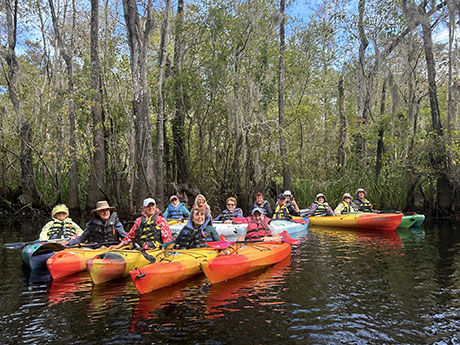
Resident-led activities can also be an important component of overall programming, explained Olsen. “If your programming is a cupcake, the cake part is whatever your company standards are. We’re going to have fitness classes, and we’re going to have a happy hour. The icing on that cupcake is going to be all the programs that your residents run. That can be anything from hiking clubs and lunch clubs to card clubs. We’ve had woodworking clubs.”
The sprinkles on the cupcake are “just the random fun things,” added Olsen, which she said can include anything from sky diving to orchestra excursions.
Olsen also argued that creating a successful culture requires participation from every staff member. “Hospitality doesn’t come just from your concierge or from your community director, but everybody on site.”
Wong concurred. “You have to have great people that are going to engage your residents.”
“Fundamentally, it boils down to people,” added Sach.
Complementary Technology
All panelists agreed that quality staffing is paramount but gone are the days when team members were strictly human, according to Sach.
As an artificial intelligence staff member, Meela facilitates resident and employee engagement. Created by Sach’s company of the same name, Meela can interface directly with residents and provide “really great customer service that can help people live fuller lives.”
Additionally, by assuming more rote, repetitive tasks like submitting work orders, Meela enables senior living staff members to channel their energy into more meaningful endeavors, says Sach. “It eliminates a human being from being in a procedural loop and allows them to focus more on the culture and human connection,” he explained.
Connection is, after all, a key component of active adult’s value proposition. Other subsectors of seniors housing may draw residents based on the fulfillment of medical or day-to-day needs. Active adult residents, however, could easily live on their own or in standard multifamily porperties.
“Activities, programs and the benefits of those features are the sole reason to live in [active adult] communities,” Thompson pointed out. “Otherwise, how does this space even differentiate itself from all the other types of real estate?”
Therefore, a compelling sense of community and worthwhile programming are key to drawing — and keeping — consumers.
“When you are having social connection with people, you get endorphins,” said Olsen. “And happy people don’t leave.”