
By Matt Valley
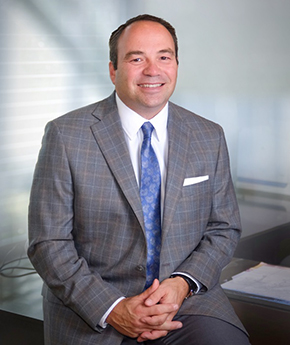
The past year has been a momentous one for Richard Hutchinson and Discovery Senior Living, the largest privately held seniors housing operator in the United States.
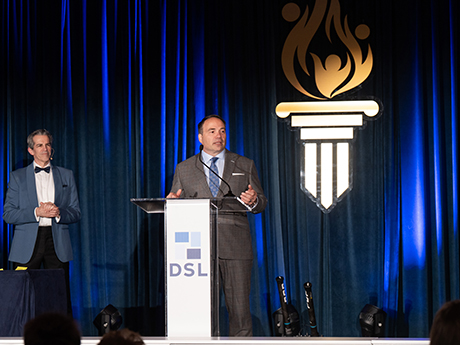
In February, Hutchinson was elected chair of the American Seniors Housing Association (ASHA) for the 2026-2027 term. Meanwhile, the Bonita Springs, Florida-based company that he co-founded more than 30 years ago — and currently leads as CEO — has experienced rapid growth by shifting its strategy toward a highly scalable regional management model.
Discovery has expanded its operations through major management agreements with institutional real estate partners such as Welltower, Diversified Healthcare Trust (DHT) and Ventas, all publicly traded real estate investment trusts.
In June 2025, Welltower acquired NorthStar Healthcare, along with its portfolio of 40 senior living communities, retaining Provincial Senior Living (a Discovery management company) as manager for 33 communities throughout the country.
In August 2025, Ventas selected Discovery to assume the operations of 15 senior living communities across multiple states. The properties have been integrated into three of Discovery’s nine management companies, including Integral Senior Living, Discovery Management Group and TerraBella Senior Living.
In October 2025, Discovery entered into multiple management agreements with DHT to operate a 42-community, multi-state senior living portfolio. In similar fashion, the 42 communities are distributed across several of Discovery’s management companies to maximize local market insight while maintaining national support infrastructure.
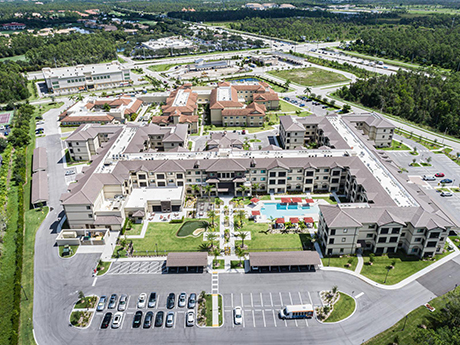
As a result of this flurry of activity, Discovery now manages approximately 420 communities with nearly 47,000 units across 40 states. That’s a healthy increase from June 1, 2025, when
Discovery’s management portfolio included 362 properties and 39,236 units, according to the ASHA 50, an annual ranking of the 50 largest U.S. seniors housing owners and operators.
Discovery currently ranks No. 2 on the operator list, second only to Brookdale Senior Living. Hutchinson oversees a workforce of almost 25,000 employees.
In his new role as ASHA chair, Hutchinson succeeds Kathy Sweeney of Blue Moon Capital Partners. He works alongside ASHA’s executive committee to guide the association’s priorities. Key areas of focus include workforce development, improving the resident experience, advancing innovation across disciplines, and fostering a greater understanding of the value senior living provides to older adults and their families.
Hutchinson’s military background has shaped his leadership style. He served in the U.S. Army from 1986 to 1994, including a tour in Operation Desert Storm during the Gulf War. He likes to use military terms to describe select seniors housing operations. For example, he refers to the business assimilation team at Discovery as a “special ops” team because of its disciplined approach to integrating new communities into the company’s portfolio.
Seniors Housing Business spoke with the longtime executive about his career path, the reasons behind Discovery’s rapid growth, and what he hopes to accomplish as ASHA chair.
From Small-Town Maine to the Military
Seniors Housing Business: You grew up in rural Maine. Where exactly? What ultimately led you to serve in the military?
Richard Hutchinson: It’s a little town in Maine called Pittston (population 2,875 as of the 2020 census), and it’s located near the capital of Augusta. If I were to tell you that it was one of those one-stoplight towns, I’d be off by one stoplight. We had hundreds of people in our town. It was a great upbringing. Pittston offered all the things you think of in a small rural town in Maine.
Regarding military service, there were not a lot of [job] opportunities in that area of Maine. We were a poor family, so college was not something we could pay for. It was a situation where I could either go to work in one of the mills, such as Bath Iron Works (a large shipyard about 30 miles south of Augusta), or go into the military. I decided that I wanted to get out of Maine, as a lot of young people do. Then, as you get older, you want to go back to Maine. But as a young person, I wanted to experience the world.
I ended up joining the military and earning my degree while I was in the military. That was the first step in the long journey to where I am today. (Hutchinson graduated with a bachelor’s degree in accounting from Saint Leo College, now Saint Leo University, in Florida and eventually became a certified public accountant.)
SHB: What aspects of your military training have you applied to your seniors housing career?
Hutchinson: Discipline and execution are part of it, but what I apply most is the ability to operate in a very dynamic environment where you need to make nimble decisions. Like they say, upon first contact with the enemy, the battle plan goes out the window. It almost feels like that every day in seniors housing.
From the standpoint of running an organization, it’s important to have that nimbleness and actionable intel, but you don’t want to require so much intel that decision-making stalls. We have that 80 percent rule in the military. Give me 80 percent of the information, and I’ll make a decision. We can’t wait to have 100 percent perfect information to move forward.
On the leadership side, the military’s most influential lesson for me began in basic training: You’re put into a situation where you must coalesce a team from all walks of life and get everyone to rally around a single mission.
One fallacy about the military is how rigid the leadership is. It’s actually the opposite. The army defines leadership as the art of influencing others to accomplish a mission, and it really is as much an art as a science. It’s not just about policy and procedure.
It’s about being able to understand the individual you’re sitting across from, identifying what motivates him, and then using that knowledge as a leader to get him aligned on the mission alongside others who have different motivations.
The Genesis of Discovery Senior Living
SHB: You departed the military in 1994. What was the next step in your career?
Hutchinson: I had a small stint with a timeshare developer for less than a year, and then I got recruited into a company called Florida Design Communities developing master-planned communities. In 1995, we ended up buying out a company called Westinghouse Communities Inc., which was part of the Westinghouse Electric Corp. family. We bought their real estate holdings. (The newly combined entity was renamed WCI Communities.)
We developed large master-planned communities that were highly amenitized, upper-end type projects, mostly located in Florida. Initially, we did a lot of high-rise development along the coastlines.
At the exact same time, fewer than six months after I joined the company, we started constructing Aston Gardens at The Courtyards in Sun City Center, Florida. Discovery still operates that community today. I had a dual job back then. I was doing mostly the master-planned community development activities. I quickly became very focused on the senior living portion of the business.
(WCI Communities spun off its seniors housing development and management operations into a company called Aston Care Systems in 1994. Discovery Senior Living was built upon the foundations of Aston Care Systems, which originally planned and developed the flagship Aston Gardens communities in the late 1990s and early 2000s.)
SHB: When you came out of the service in 1994, you could have gone into any number of industries. Why did you choose real estate construction and development?
Hutchinson: It was about the only thing I was familiar with. Because I entered the military right out of high school, I wasn’t exposed to much. During my upbringing, my dad often helped build homes. In Maine, you get your family and friends together to build your house. So, we did that a lot. Whether it was commercial construction, a small residential home, or a huge community, the building blocks and concepts of it were very familiar to me, and it was attractive. There was just something in my DNA. I enjoy creating something out of nothing and having it be useful.
Hyper-Regional Management Model
SHB: Discovery’s strategy centers on taking advantage of a scaled platform, maintaining high-quality care through a regional management structure, investing heavily in technology and clinical excellence, and providing a high-end hospitality mindset. Can you break down that strategy into some of its individual components?
Hutchinson: Having been a veteran of this industry and watching other companies scale and be challenged at scale, I realized as we crossed the threshold of 50-something communities a while ago that we couldn’t follow the same path.
The industry perception — which I believe is reality — is that it’s not a local business, but rather a hyper-local business. Your ability to squeeze out those very precious points on the margin is tied to satisfying the local customer with precision.

It is challenging as you scale to stay connected to the local market. And because of that, our construct is very different. To gain true scale in a hyper-local business, you need a horizontal growth model. That means you segment your product, your geographies and your customer sets, and then you create bespoke mechanisms to serve them in a very nuanced and precise way.
To understand Discovery, what you really need to think about is segmentation. These nine management companies we have — and that number will continue to grow — allow us to [serve] a concentration of customers who are of like means and will pay for a perceived value at a certain amount. They like the delivery of services in a very bespoke way, so we operate that management company to [accommodate] that customer cohort. That means these companies must have local expertise.
It’s a horizontal-growth model with a hybrid franchise model concept. I’ll use McDonald’s as an example. We’re going to offer a Big Mac, and yes, we’re going to use our scale to provide you the meat, the cheese and all the fixings at the lowest cost humanly possible. We’ll handle a lot of your local marketing.
But the difference is that in a hybrid franchise model with a local product, you need to have variability and be able to customize that Big Mac. So, that secret sauce, the special sauce, is going to be different in every location, and it will not be prescriptive. All of our leaders will have their own secret sauce among our nine management companies.
That means I have to run a [decentralized] platform, meaning it is not Richard who is making the decisions day to day on everything that’s going on in these management companies. I have Dartmouth College MBAs, U.S. Air Force Academy grads, JPMorgan Chase alums, McKinsey & Company consultants. These are the backgrounds of the presidents of these management companies that we run.
SHB: What’s the challenge of executing this concept?
Hutchinson: My challenge, and our team’s challenge, is making sure that the overarching support infrastructure has evolved and is segmented to line up with these management companies so that we have the necessary metrics. We establish customized metrics for each management company.
So, we’re not measuring food costs per resident per day generically across an organization. We’re measuring it very precisely based on food service delivery in a local market area.
It’s not cheap to run a horizontal model. But I made the decision long ago that I’d rather be very successful in performing at a high level — and maybe leave a few points on the margin at the operating company — rather than aspire to gain a magical margin from scale only to never achieve it.
I want all those smart presidents and their entire management companies focused downrange on the experience of our residents, their families and our team members and to optimize the economics in the local market.
What I don’t want them doing is thinking about the next CRM (customer relationship management) tool, or how AI is going to impact this, that or the other, or what website changes need to be made to make it more mobile-friendly. I don’t want them thinking about any of that stuff.
Technologically Ahead of the Curve
SHB: Discovery has invested millions of dollars into its technology infrastructure. How are you leveraging that for maximum results?
Hutchinson: We started our business intelligence group in 2017 before it was cool to be data driven. We have a best-in-breed tech stack that runs 22 different systems, which create data throughout our complicated, very operationally intense business.
We bring all of that data into our Snowflake virtual warehouse (a cloud-based platform for data storage). Then we use our business intelligence group and its reporting capabilities through Power BI (Microsoft’s business analytics platform) to create very highly correlated and actionable data information for these
McKinsey consultants and Dartmouth grads and JPMorgan alums about their business.
Not only are we pushing down to them the support services from the training center, but from a technology standpoint we’re also able to capture the data, create correlations, and tell them to ‘look here’ in very simple fashion.
We have been growing fast, but it’s almost exclusively organic growth. The reason isn’t because I am the best joke teller and buy the best bottle of wine and have dinner for people. Simply put, we outperform because of our model. It’s going to maximize every P&L (profit and loss) statement in every community because of this bespoke playbook with the hyper support and the data orientation that we provide to people.
Then there are the benefits of scale. Every other industry in the world knows that you can scale and have tremendous purchasing power. We’re doing that. Suddenly, we’re outperforming our operator peers, and ownership groups want to grow with us. And because of that, we’ve had hyper-organic growth.
The beauty of the system is that the more we grow, the more I can segment and specialize. I can increase performance with growth. And so, it just becomes self-perpetuating. The larger we get, the better off the owners actually are in the entire platform.
SHB: Are there any downsides to Discovery’s fast rate of growth?
Hutchinson: Growing at this pace can be distracting for operators, so we have also created a business assimilation team. (Working on behalf of the owners and capital providers Discovery collaborates with, this team is responsible for integrating the newly acquired senior living communities into Discovery’s management portfolio.)
So, the first 90 days before and then post transition of these communities, our operators really aren’t impacted at all because the ‘special ops’ team goes in and assimilates the community. You don’t have the dip in performance post transition that has been part of our industry forever because you have this team that provides hyper-specialized care inside that assimilation.
Oftentimes, during this transition and assimilation process, the operator gets bogged down in systems conversions, contract negotiations, onboarding of payroll and benefits for the team. It doesn’t spend any time figuring out what it’s going to do to change the trajectory of the operations. The operator doesn’t get to start executing on that until sometime after all the transition noise occurs. That dip you see in performance is often tied to the integration.
Search for the Right Capital Partner
SHB: Which sources of capital have enabled you to make such a sizable investment in people and technology?
Hutchinson: The model is hard to replicate because of the expense and rigor that goes into building it. Once you get the model to scale, it can self-perpetuate and move fairly quickly on the scaling. Financially, my business partner and I did everything for a long, long time.
Many people don’t know that early in its life cycle (2013), Kayne Anderson Real Estate Advisors came in, took a piece of Discovery and helped us build out the operating platform before it exited. In 2022, we brought in Lee Equity Partners and Coastwood Senior Housing Partners, both private equity investors, to provide an additional infusion of capital to build out the best-in-breed tech stacks.
It took me a while to find the right capital partner. I wanted one who had experience in building operating companies. We have a million private equity players in this space who are focused on real estate, and that’s not what I wanted inside the operating company.
I wanted a private equity firm who had a buy-and-build strategy and a long history of building the platform and the ecosystem of an absolute world-class operator, not an absolute world-class real estate owner. We also had plenty of pure healthcare private equity firms that wanted to come in, given the healthcare opportunities in front of us.
Since the deal with Lee Equity Partners and Coastwood Senior Housing Partners closed in 2022, we’ve deployed a lot of capital and built up the infrastructure. Because of our scale, our margins are really good at the operating company. We’re very profitable with a very low amount of debt. Our financial prospects are really good.
SHB: What’s your definition of a good margin?
Hutchinson: Most operating platforms are trying to get to that sweet spot between 25 and 35 percent operating margin. You can be smaller and beat that because it’s more localized. At scale, if you can achieve a 25 to 35 percent operating margin you are doing pretty well.
ASHA’s Punch List of Priorities
SHB: As the new of chair of ASHA, what are some of your top initiatives?
Hutchinson: This is an important year, more important than others. And I’m not saying that like a politician says this is the most important election ever. I’m saying that because this happens to be our strategic planning year. Every five years, we draft a five-year strategic plan, and in 2026 we’re in the process of doing that. Over the next five years, there are some really big things that need to move for us to be positioned well as an organization in support of our industry. ASHA, as the leading industry voice, needs to take lead on a lot of big things.
Having said that, I’m chair for two years, and I’m not wasting a whole year just planning. I want execution on some things, and I know our executive board does as well.
Regarding the “State of Seniors Housing” (a benchmarking research report that provides operational financial and marketing data), we are in the process of digitizing and creating a more contemporary platform for the utilization of data. We have a great opportunity to increase participation in the data collection, which is now done quarterly, while continuing the segmentation of the data and making it more readily available and transparent.
Where You Live Matters (ASHA’s consumer education and referral website) is a big piece of my personal focus as chair. I would like to attack the negative bias that the general public has toward seniors housing. For too long, we’ve allowed others to control the narrative of our industry, and because of that we’ve created this negative bias.
SHB: Any other items on your priority list?
Hutchinson: The workforce initiatives are a priority, and everybody knows what’s going on there. And then there is the biggest one — advocacy. It’s the long game on Capitol Hill. You don’t show up and make a change tomorrow by your efforts today. It’s what you’ve done over the past 10 years that makes an incremental change over time. Advocacy will be a huge focus for us this year.
‘I Love an Operational Challenge’
SHB: You oversee a large organization, and you’ve accomplished so much. What keeps you motivated?
Hutchinson: I am even happier to wake up in the morning and get after it than I was 30 years ago. I think about it in different buckets. It’s the three-dimensional chess that I play every day.
Growing the company, meeting with investors, doing my part for the industry, undertaking all those strategic kinds of things motivates me. Thinking about the construction of the organization and the fact that we’re on a pioneering journey — and how we continue to evolve the construct of what we’re doing — gets me up in the morning. And the third leg of the stool is the same leg of the stool that it’s been for 30 years — delivering services to seniors.
Believe it or not, and I’m famous for this internally, I will dig into a single problem in a single community to try to help. I love an operational challenge.
SHB: Is there something people in our industry would be surprised to learn about you?
Hutchinson: I have a lot more balance than people think. They think I’m 99 percent business, 1 percent life, but I have more balance than that. My wife and I have built an orphanage in Zambia. There are 68 kids in that orphanage who we care for. There are other things in life that I do besides work. Work certainly is a big piece of my life, but I like to be balanced.
— This article originally appeared in the May-June issue of Seniors Housing Business magazine.