
By Beth Mattson-Teig
Marketing 101 is to know your target customer. And for many senior living communities, that customer focus is shifting to baby boomers and their Gen X children.
Boomers are taking a bigger step into senior living across all segments — from active adult and independent living (IL) to more needs-based assisted living (AL) and memory care. Baby boomers are generally considered to be more tech savvy, active and independent than their parents — and they’re proving to be very discerning customers.

“As the next generation of older adults and their adult children are arriving on the scene, we’re finding them to be a lot more informed — especially in terms of all the information that is now available online and also offline,” says Jamison Gosselin, vice president of marketing and communications for Watermark Retirement Communities, an operator of 27 high-end senior living communities across the country.
Marketing teams are adapting to changing demographics and consumer behavior. As people start exploring the idea of senior living, they want to access information in the same way and same places as when they’re shopping for other things. They’re going online from their phones and computers to look at photos and read online reviews.
“There’s a lot of information and misinformation that’s still out there about what we do,” says Gosselin. “While we’re making good strides as an industry, we’ve got a lot more work to do to be more approachable to the consumer as they think about what they want.”
Adding to the challenge is that it’s a process that people aren’t generally familiar with, which fuels a bigger appetite for information and education as part of marketing content.
Not a One-Size-Fits-All Market
Along with the up-and-coming baby boomer cohort, senior living communities are still serving the Silent Generation. And the audience of adult children and influencers of seniors now spans a large and diverse group of boomers, Gen X and Gen Y (millennials). According to data from Pew Research, 10 percent of all adults in the U.S. report being a caregiver for a parent who is age 65 or older.
That demographic shift is driving owners and operators to think about how to better tailor their core messaging and more effectively deliver it to different audiences. “It creates a fascinating dynamic when shaping a marketing strategy,” says Jennifer Dixon, CEO of Providence, Rhode Island-based JD Solutions Group, a sales, marketing and consulting firm specializing in senior living. “You’re communicating with existing residents and families who already prefer certain channels and messaging styles, while also reaching an entirely new audience that is just beginning to consider senior living — and they require a very
different approach.”

Some marketing teams are taking a deeper dive into consumer psychology and psychographic information to develop more targeted, effective marketing strategies. That psychographic focus goes beyond the age and income of a population within a certain radius around a community, and digs into data about values, beliefs and lifestyle.
“There’s a growing interest in understanding market segmentation on a much deeper level and then building messaging strategies around those insights,” says Dixon. “That represents a major evolution from the more cookie-cutter approaches that used to dominate the industry.”
Hurdles to Clear
There are three challenges that are often overlooked when marketing to seniors and their adult children, according to Kim Rosengren, CEO of Daytona Beach, Florida-based Markentum, a digital marketing agency that focuses exclusively on seniors housing.

“First, the content must appear where the viewer is. For example, a senior might start research on a tablet and then move to a bigger screen for in-depth reading. The GenX child will start on a smartphone and may never veer from that medium. A community must have a digital experience that displays well in every medium and loads in less than five seconds,” she says.
The second challenge is optimizing lead generation. The first community that responds to a lead often wins, points out Rosengren. The Harvard Business Review reports that a sales rep is 21 more times likely to qualify an inbound lead when calling within five minutes compared to waiting 30 minutes. Communities that text a prospect in less than 60 seconds of submitting a form have a 40 to 70 percent higher lead conversion rate and 30 percent higher tour rate.
The third challenge is that sales teams tend to spend most of their time on the 23 percent of leads that convert quickly. “Most could benefit from a lead nurture model that engages the 77 percent of leads that are not ready to make a senior living decision yet but could be with the right level of communication,” says Rosengren.
Selling a Lifestyle
Baby boomers are a very lifestyle-focused group, which means that marketing strategies are moving away from only talking about community amenities. “Baby boomers see themselves as thriving, not necessarily as wanting or needing to be cared for,” says Julie Podewitz, CEO and founder of Grow Your Occupancy, a sales and marketing solutions firm based in Brentwood, Tennessee.
While amenities matter, Podewitz notes that baby boomers are focused on a bigger question: “What am I going to do all day?”
Boomers need compelling reasons to move in, or at least reasons that might spark their interest to start the conversation. Experiences really matter, and the lifestyle aspect is equally important across all property types from active adult to memory care.

They want to know what the day in the life of a resident looks like at a community. Can they build meaningful relationships with others in a community? Are their lives going to be better by living there, or will they be forced into a routine they’re not comfortable with?
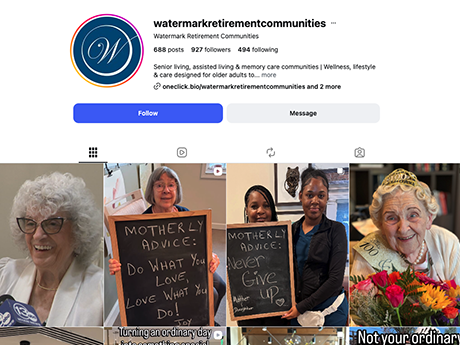
Social media has become a great channel to tell that lifestyle story. However, marketing experts agree that videos and photos need to be authentic with real people and real experiences.
For example, Cogir Senior Living is leveraging social media influencers in a new “Granfluencer Residency” program to showcase authentic community life and challenge outdated stereotypes.
Cogir is taking applications for “content creators” age 65 or older. These individuals will document their day-to-day life via social media posts during a month-long stay at one of Cogir’s communities.
The senior living industry is finding creative ways to engage people who might be thinking of entering a community and give them a taste of the lifestyle — even if that move might be two or three years out.
For example, one independent living community that Podewitz worked with hosted a series of educational events that were open to residents and non-residents, such as how to roll your own sushi, flower arranging and candle making.
The series also created social media opportunities to post photos and videos from the events. “You have to show people why they would want to come and live in your community,” says Podewitz.
Marketing to Gen X Children
Baby boomers have shifted from helping make decisions about care for their parents and older relatives to now making decisions for themselves. Likewise, their Gen X children are stepping up to have conversations with their boomer parents about senior living options for the next phase of their lives, whether it be for a lifestyle choice or a need for more care or assistance.
The questions Gen Xers are asking are not drastically different. How much does it cost? What’s included in the cost? What are the amenities? What are the floor plans? “Gen X values efficiency, responsiveness and transparency. They want quick answers,” says Podewitz. Many are still working and managing their own busy lives, and they want clear communication and easy access to information.
Gen Xers are referred to as the digital pioneer generation, but they’ve also lived through traditional marketing. “I think that particular consumer is still looking for a little bit of a mix of both, but we’re definitely leaning heavier into the digital strategies, which is making marketing more complex,” says Kaleb Scharmahorn, founder and CEO at Grit & Gravel, a strategy-led marketing agency based in Lebanon, Tennessee.
Along with the increase in digital marketing comes more channels to utilize and manage, which is especially challenging for communities or companies that have small marketing teams. “Oftentimes, that translates to ineffectiveness of some of those channels because there’s just not enough time on task,” adds Scharmahorn.
Communities need to create an emotional connection with prospective residents to give them a reason to leave their homes. The emotional side must show what life is like in a community, such as with resident testimonials or a downloadable calendar of events.
The practical side resonates more with Gen X adult children or influencer relatives. “If you ignore either side, you’re missing a huge piece of the decision-making process,” says Podewitz.
Gen Xers are often looking for information that helps them navigate senior living choices for their loved ones. The adult children often step into research because mom or dad is sick, or they may need more convenience or assistance with day-to-day tasks such as cooking and cleaning.
Providing quality educational materials such as downloadable information, short videos or QR (quick response) codes to landing pages that cover the financials, is important to the overall marketing and sales process.
Leveraging Digital Channels
Baby boomers are increasingly tech-savvy. A majority use the internet and own smartphones. According to Smart Insights, an educational platform for marketing consultants, boomers now spend an average of 27 hours per week online and over five hours per day on their smartphones. As such, marketing strategies are increasingly emphasizing digital channels including websites, social media and online ads.
“We still see a lot of favorable information being brought to light through traditional media channels. However, the vast majority of our dollars goes into digital channels because that’s where people are,” says Gosselin. Marketing strategies are leveraging social media platforms such as Facebook, Instagram, TikTok and YouTube, as well as online platforms such as Reddit and Substack.
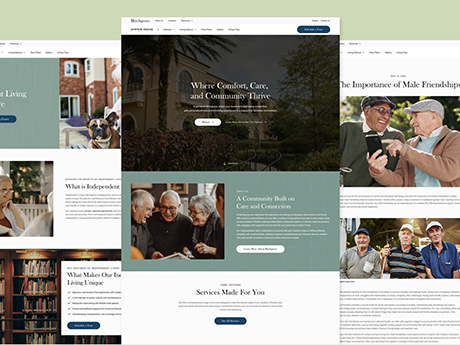
“The best investment that you really make is going to be your own website, and how you go about using that website to create a smooth, barrier-free user experience for people,” says Gosselin.
The website experience is paramount, agrees Scharmahorn. “You control the message. You control how that message is communicated, and you control the context around that message,” he says. “The website experience is the digital doorstep. It’s the only single source of truth, and that’s where everything has to start.”
Because the website is the first place that users go to for information, it’s important to think of that digital doorstep much the same as if someone knocked on the door. Communities need to use their websites to give them a virtual tour, show the amenities and show people the experience of residents enjoying life at their community, advises Scharmahorn.
People are consuming information differently. Instead of reading, they want a video that creates an experience and tells the story of a community. Video has the added benefit of increasing time on a website, which is what today’s search engine algorithms are looking for, adds Scharmahorn.
Measurable Success Stories
Solid, honest collaboration between an operator and a marketing agency will always net better results, emphasizes Rosengren.
“For example, Brightwater Senior Living was very honest about its frustrations with the previous agency’s lead generation results. That knowledge helped us create a strategy that led to a 300 percent year-over-year increase in qualified leads,”she says.
HarborChase Senior Living approached Markentum a few years ago to help refine its brand messaging and build a new website and marketing programs around the brand. “More authentic, differentiated messaging and new interactive designs led to a 179 percent increase in organic leads within six months of the launch,” says Rosengren.
Adapting to AI Searches
Traditionally, marketing teams have focused on search engine optimization, or SEO, to drive traffic to websites. Now strategies must account for AI-powered search engines such as ChatGPT, Google AI, Claude and Gemini that are putting information in the hands of consumers.
“The complexity at which everyone in marketing today is dealing with is tremendous, and artificial intelligence is literally changing the game,” says Gosselin. “How do we keep up with these new systems and how they work? It is the Wild West right now, and I think all of us are learning daily.”
For example, Watermark recently conducted an audit of the top AI search engines to try to figure out where they were sourcing information from when asked simple questions, such as “What are the best senior living communities near me?” They found that ChatGPT often relies heavily on third-party websites, such as U.S. News & World Report, whereas other chatbots rely more on online reviews.
Another challenge is how to create copy that addresses the questions that people have when they reach the website, while also meeting the criteria for AI search engines.
“We’re going to have to figure out what’s going to work for the AI bots, and then how do we avoid some awkwardness in terms of phrases and keywords,” says Gosselin. Watermark is currently working on a total website refresh that will be introduced in the fall that aims to satisfy both of those components.
“Search results generated by AI platforms such as ChatGPT, Claude and Gemini are heavily influenced by the quality and authority of a company’s website, particularly how informative and transparent it is,” adds Dixon. “That ties directly into the growing expectation that consumers should be able to access meaningful information much earlier in the decision-making journey instead of relying on, or waiting for, the salesperson as the primary source.”
Understanding the role of AI is an overriding challenge that impacts every marketing strategy and tactic, says Rosengren. “AI is great at some things — reproducing content, for example — but it is not great at building websites or even managing Google and Facebook ads.”
While AI can accelerate website development once the content and imagery are complete, it lacks the emotional understanding needed to create senior living content that truly captures the human imagination, says Rosengren.
Google and Meta AI tools are accelerating fast but are not fully developed, explains Rosengren. “For example, the technology can and will create new ads. However, it doesn’t understand the differences between multiple communities listed on a single URL (uniform resource locator) and will mix and match photos and URLs incorrectly in an ad.”
Despite the myriad challenges, the shift to digital platforms is creating more opportunities to connect with both residents and their families. Successful strategies will be those that continue to evolve and adapt to new technologies and an ever-changing consumer.
From clicks to conversions, marketing teams capture more data to drive better results
Operators are leveraging data and analytics to tailor strategies that achieve better outcomes and return on investment (ROI) on their marketing spend.
“We have to be very intentional on how we go about spending our marketing budgets,” says Jamison Gosselin, vice president of marketing and communications at Tucson, Arizona-based Watermark Retirement Communities. “We’ve got to feel good that it’s moving the needle for us in some form or fashion.”
One area that many communities struggle with is tracking performance. The journey from an initial inquiry or click to move-in can span years. “Where some marketing teams fall short is connecting all the data points,” says Kaleb Scharmahorn, founder and CEO at Lebanon, Tennessee-based Grit & Gravel, a fractional marketing team.
Data on lead generation, impressions and clicks are all important indicators. However, communities need to make sure they’re connecting the dots from an initial inquiry or lead all the way through to a move-in. That path paints a true picture of performance — what’s working and what’s not — to refine marketing strategies, adds Scharmahorn.
If a direct mail campaign lands in homes on the first and third of the month and lead volumes suddenly start to grow from direct traffic to the websites, what would prompt those searches to the website?
The challenge for marketing teams is to track those connections, which ultimately helps to analyze the effectiveness of different marketing initiatives, as well as calculate cost per lead and cost per move-in.
Sales and marketing professionals utilize customer relationship management (CRM) systems and other data tools that help to connect different parts of the lead generation pipeline or sales funnel. It’s critically important to look not only at the volume of leads coming in but also at the quality of those leads along with the conversion rates, adds Gosselin.
Watermark is currently working on a project that examines how to tie the upper funnel (data from the beginning of a customer journey such as from Google Analytics or Google Ads) into the lower part of the funnel (the leads, the tours and the move-ins that sit in CRM systems).
“It’s a complex exercise because we have data sitting in all these systems that we use for the marketing tech stack,” says Gosselin. “How do we bring that all together and ultimately allow us to tell the story of the numbers and conversions?”
Gosselin emphasizes that for every dollar put into the funnel, it is critical to understand the signals a lead sends — from initial interest to final intent — as it moves through the pipeline toward a move-in.
— Beth Mattson-Teig
— This article originally appeared in the May-June 2026 issue of Seniors Housing Business magazine.