
By Hayden Spiess
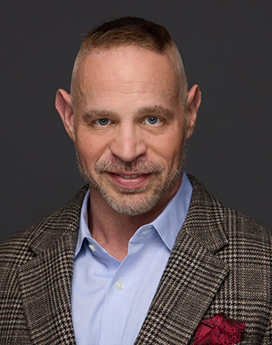
Christopher Metternich believes that senior living residents know more than the industry gives them credit for.
“Sometimes we think that we’re a little bit smarter than a resident,” muses Metternich. “Instead of thinking that way, we should be looking at the residents to tell us how we should do our business. They’re paying us money, and they are asking for services in a certain way.”
Metternich is founder and part owner of Viva Senior Living, a third-party seniors housing management company that incorporates a resident-centric attitude throughout its operations.
Since its inception roughly five years ago, Viva has grown considerably. Currently, the operator’s portfolio is approaching a unit count of 3,000, with a total of 2,704 units. Viva now operates 40 communities across 12 states, which include Georgia, Indiana, Louisiana, Maryland, Missouri, New Jersey, New York, Pennsylvania, South Carolina, Tennessee, Texas and Virginia.
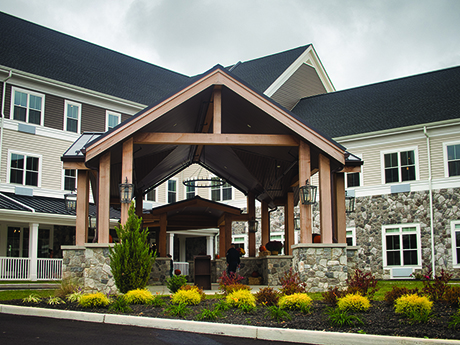
Viva reached its current number of communities in January of this year, when Logos Living Capital tapped the company to operate four newly acquired properties in the Northeast.
“We’re growing with more states coming,” says Heather Terhark, chief strategy officer for Viva. “We can’t keep up with the demand.”
The unit mix across Viva’s communities is weighted toward higher levels of acuity. “Assisted living and memory care are really our big focuses and what we do really, really well,” asserts Terhark.
Undermining Uniformity
Metternich and Terhark explain that a key element of Viva’s approach to its portfolio is resisting the urge to apply a cookie-cutter method to its communities. According to the executives, it is important to recognize the unique locale of each property and how this might inform the needs and desires of residents.
“Communities are built around the town that they reside in, whether it’s a rural community in the middle of Tennessee or a building outside of Atlanta,” says Terhark. “We approach them very differently.”
According to Terhark and Metternich, the food-and-beverage offerings across Viva’s portfolio are emblematic of this approach. “Everything is centered around the residents, and the dietary program is a perfect example,” says Metternich. “If you take a Louisiana community, they may do a gumbo. But if I go go to the South Carolina buildings, they might have something different.”
Metternich shares that residents are directly involved in determining the menus at each Viva property, where tastings are conducted seasonally. “They’re rolling out new menus and asking the residents what they like,” he reports.
Resident activities, too, vary across regions and communities. Terhark points out that Viva Senior Living at Oakwood Village in Zachary, Louisiana, hosted a lively Mardi Gras parade. “Activities are geared around the larger community in which the seniors reside,” she explains.
Viva’s approach to resident satisfaction seems to be paying off — the company has achieved approximately 94 percent occupancy across its portfolio, according to Metternich.
Elevating Employees
This is not Metternich’s first seniors housing rodeo. Prior to founding Viva in 2021, Metternich’s experience included executive roles at Windsor Healthcare Communities and CareOne Management.
Metternich, an occupational therapist by trade, first started as an aide, working his way up the ranks. His own history has informed Viva’s mindset toward attracting and cultivating talent, which he says is one of the biggest challenges currently facing any seniors housing company.
“We want to retain talent in our industry,” he says. “It’s been leaving us since COVID, and it’s a real scary moment.”
Despite the inherent difficulties of senior living staffing, Viva uses almost no agency employees at is properties. “Agency use is not the best approach for a business,” he argues. Instead, the company focuses on making employees feel valued, which Metternich argues also enhances the level of care for residents.
“We know happy employees are going to take care of residents in the way that they need to be taken care of,” elaborates Metternich. “I have to treat the employees well to ensure they always focus on the residents. Everyone in this company is important. Viva is our team at the ground level.”
Metternich says that allowing for staff’s professional growth and making workers feel valued is central to achieving the end of a well-staffed organization.
“We want employees to feel like there is mobility within our company,” Metternich explains, adding that the company makes a point of asking new employees about their ultimate career goals and investing in training.
Viva also employs a unique leadership structure throughout its ranks, with the portfolio divided into regional teams. In each region, Viva appoints so-called “super leaders” to guide those teams. “Super leaders still have a connection to a specific building, but they have a sort of teammate approach to helping the region work together,” explains Metternich.
New Developments, Investors on the Horizon
Thinking in regional terms also enables Viva to grow not only robustly, but efficiently. “We have a good map of how to expand and grow,” says Terhark. Organizing and growing the portfolio by clusters of six to 10 communities allows Viva to dedicate the appropriate attention to those communities and achieve cost containment, she says.

“This approach gives us that opportunity to continue to grow, but to do it successfully, while having an eye on what’s happening,” adds Terhark.
Metternich notes that Viva is — along with the rest of the industry — awaiting the return of greater levels of development funds and activity.
In the meantime, Viva is currently involved in the development of a new community in New Jersey, which the operator will manage on behalf of a nonprofit. The project is currently under construction and will mark the second new-build in the state for Viva. Upon completion, the community will total 130 beds.
Viva is also engaged in a project in Princeton, Texas, a renovation of a facility that will comprise 176 beds upon its reopening.
Another avenue of growth is investors new to the senior living sector. “We love the new investors to this world,” says Metternich. “We think that’s a really important factor as our industry grows, and we want to be able to educate and support folks that don’t already have an arm in this business.”
Ultimately, Viva is committed to keeping pace with the ever-evolving landscape of seniors housing.
“We just continue to stretch,” shares Terhark. “Looking at where senior living is going to be in five to 10 years from now…we will take what we do now to be able to serve the individuals of the future.”
— This article originally appeared in the February-March 2026 issue of Seniors Housing Business magazine.